
Your cart is empty
Browse OfferingsLicensed & Affiliated


Ethio Coffee Import and Export PLC is a family-owned Ethiopian coffee exporter shipping green coffee beans to roasters, importers, and distributors worldwide.
© 2026 Ethio Coffee Import and Export PLC. All rights reserved.
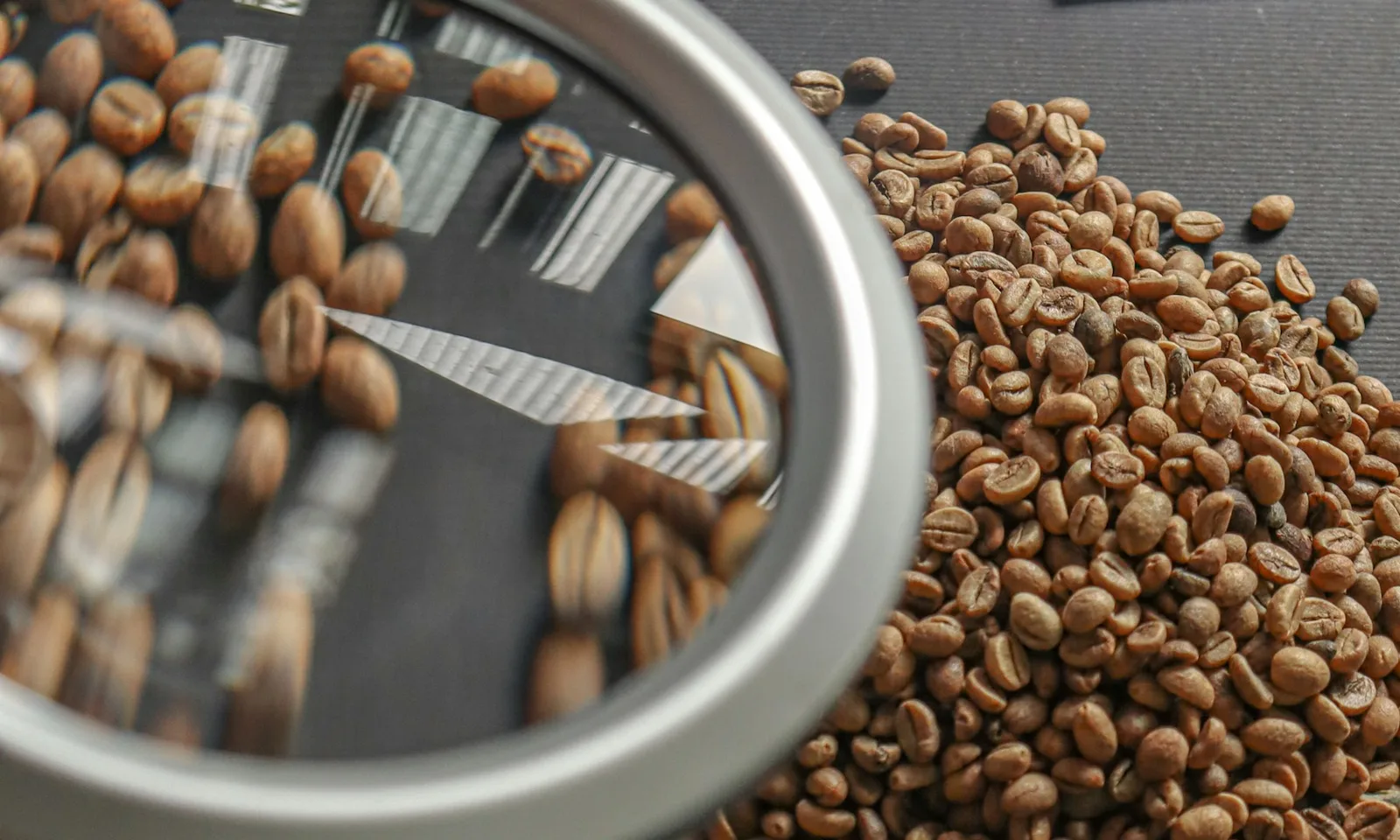
A green coffee sampling protocol is valid only when the sample represents a defined lot. Freeze the lot before sampling, select bags across its full layout, draw comparable increments, combine and mix them completely, divide the aggregate without choosing attractive beans, then seal and label every final sample. Record who sampled, where, when, how, and for which test. Cupping skill cannot rescue a biased sample.
A green coffee sampling protocol protects the decision before the laboratory or cupping room ever sees a bean. If a warehouse employee scoops coffee from the easiest open bag, the moisture reading, defect count, pesticide result, and cup score describe that scoop. They do not necessarily describe the contracted lot.
Buyers often standardize roasting and cupping while leaving field sampling to habit. That reverses the risk. A repeatable evaluation applied to an unrepresentative sample produces a precise but weak conclusion. The correct workflow starts with lot identity and ends with a sealed record that another party could audit.
This guide gives importers, roasters, exporters, and independent inspectors a usable control plan for bagged green coffee. It complements our green coffee sample roasting protocol and sample approval guide. Those articles govern what happens after a representative sample exists.
Sampling is the controlled reduction of a large lot into a smaller quantity that preserves the lot's relevant characteristics closely enough for a stated decision. The decision may be offer screening, pre-shipment release, arrival acceptance, food-safety testing, or claim investigation. Each purpose can require a different plan and quantity.
ISO 4072:1982 remains the current international standard for sampling green coffee shipped in ten bags or more. Its scope includes contract verification, sale offers, quality inspection, technical analysis, arbitration, and retained reference samples. The standard addresses increments, aggregate and laboratory samples, packing, marking, storage, and transport. Buyers should obtain the full standard when their contract requires ISO conformity.
| Evidence question | The record should show | Weak practice |
|---|---|---|
| What did it represent? | One identified, physically separated lot and its represented bag count or mass | “Current Ethiopian stock” with no lot boundary |
| How was it selected? | A planned random or systematic selection across the accessible layout | Front bags chosen because they were convenient |
| How was it reduced? | All increments combined, mixed, and divided by a controlled method | Final sample scooped from the top of an unmixed bucket |
| Can it be challenged? | Sealed buyer, seller, and retention samples with matching IDs | One unsealed pouch with an informal label |
Do not begin with a sample size. Begin with the lot. Record its code, crop, origin, process, grade or preparation, warehouse location, bag count, net weight, packaging, and production status. Coffee from different mills, processing runs, grades, crop periods, or moisture histories should not be silently combined under one sampling identity.
Freeze the lot for the duration of sampling. No bags should enter, leave, or be replaced while increments are being drawn. If the warehouse must move coffee, capture the before-and-after map and reconcile every selected bag. Sampling a moving target breaks traceability even when the physical technique is sound.
Example: “Sample lot GUJ-W-082 after final milling and bagging. Select numbered bags by a recorded random list across every stack and height band. Draw one comparable increment per selected bag, create one aggregate sample, mix, divide, and seal four final samples for sensory and physical review, buyer retention, seller retention, and referee testing.” The contract or competent authority should set the required selection scale.
A bag plan must cover the lot's geography. Include different stacks, pallet positions, rows, depths, and height bands. If the lot is accessible only from the front, pause and restack or document the limitation. Convenience sampling can miss moisture gradients, screen segregation, a localized taint, or a different preparation hidden deeper in the stack.
For regulatory sampling, follow the responsible authority's method. The European Commission SAMANCTA guidance calls for incremental samples selected randomly or systematically throughout a consignment, thorough mixing before division, food-safe containers, and protection from light, humidity, and contamination. A commercial buyer plan does not replace an official sampling instruction.
Stage equipment before opening a bag. Use a green coffee trier or another agreed food-safe sampling tool, a clean collection container large enough for the aggregate, a riffle or cross-divider where available, a calibrated scale, tamper-evident seals, barrier pouches, labels, a camera, and the approved sampling form. Keep spare closure materials for jute and hermetic liners.
Name the sampler, witnesses, lot, purpose, governing contract or method, planned final samples, and release authority. Confirm that the coffee has reached the stage the sample claims to represent.
Count bags or verify warehouse records. Photograph marks and the overall layout. Record broken bags, wet areas, odors, pests, mixed markings, or packaging differences before disturbing the stock.
Generate or document the selection before drawing coffee. Spread selections through all accessible positions. Increase scrutiny or isolate a sublot when visible variability suggests the declared lot is not homogeneous.
Use the same tool, approximate depth, and amount for each selected unit unless the written method says otherwise. Capture material across the bag rather than skimming beans beside the opening. Record any unit that cannot be sampled as planned.
Close punctures and reseal liners immediately. Mark the bag as sampled when the protocol allows it. Match every increment to the bag plan so substitutions and omissions remain visible.
Combine every increment in the clean collection container. Note unusual differences without removing them. A moldy, black, broken, or small bean belongs in the aggregate if it was legitimately drawn.
Mix completely, then reduce with a riffle divider or a documented quartering method. Do not hand-pick or scoop the most uniform portion. Bean size and density can segregate during pouring, so remix before each division.
Weigh the quantities required for physical, sensory, chemical, buyer-retention, seller-retention, and referee purposes. Create separate sealed units when opening one pouch would compromise another test or the custody record.
Apply unique IDs and tamper-evident seals. Record seal numbers, weights, recipients, date, time, condition, and each handoff. Ship promptly in odor-free, moisture-protective packaging and retain tracking evidence.
There is no single parcel weight that satisfies every buyer, laboratory, and legal purpose. Work backward from the receiving methods, repeat tests, retention needs, and the number of parties. Ask the laboratory for its minimum quantity and packaging instructions before sampling, especially for pesticide residues, mycotoxins, microbiology, or dispute work.
| Purpose | Quantity planning question | Packaging control |
|---|---|---|
| Cupping and repeat roasts | How many roast repetitions, cups, and reviewers are required? | Barrier pouch, lot ID, sample stage, and seal |
| Physical grading | What sample mass does the named grading method require, plus a repeat? | Separate pouch if grading will consume or alter the sample |
| Moisture and water activity | How many instruments, replicates, and reference checks are planned? | Low-permeability seal opened only at measurement |
| Chemical or food-safety testing | What minimum, counter-sample, and chain-of-custody rules does the lab require? | Laboratory-approved container and tamper seal |
| Retention or referee sample | What tests may need repeating, by whom, and before what expiry? | Independent sealed unit stored under recorded conditions |
Current buyer requirements show why contracts must be explicit. JDE Peet's green coffee sourcing terms, for example, request 300 grams per purchase order for a pre-shipment sample and 1 kilogram for certified organic coffee when additional testing may be required. Those figures are one buyer's requirements, not universal standards.
| Stage | Decision | Required identity |
|---|---|---|
| Type sample | Does this general quality direction interest the buyer? | Clearly marked non-representative; never presented as a finished lot |
| Offer sample | Should the buyer contract the identified available lot? | Lot, available quantity, location, preparation status, and sampling date |
| Pre-shipment sample | Does the final prepared lot meet the contract before release? | Contract, final bagged lot, represented volume, mill date, and seal |
| Shipment sample | What quality was loaded into the named container? | Container, seal, load date, bag range, and bill of lading reference |
| Arrival sample | Did received coffee remain within the contract and approved reference? | Receiving event, container seal, warehouse lot, condition, and sampling map |
Never compare two stages as if agricultural material must be sensory-identical after weeks of transport. Compare each against written tolerances, disqualifying defects, and the approved reference. Our green coffee specification sheet explains how to define those limits, while the receiving inspection checklist governs the arrival event.
Ethiopian coffee can move from many smallholders through a cooperative, washing station, dry mill, and export warehouse. That history does not make a finished export lot impossible to sample. It makes the final lot boundary and preparation stage especially important. The sampler should identify the export lot that actually exists after cleaning, grading, sorting, and bagging.
Buyers evaluating Ethiopian coffees should connect the sample ID to the same fields used in the Ethiopian coffee traceability record. Origin descriptions are useful, but bag marks, lot codes, dates, and represented volume are what preserve commercial identity.
The final record should travel with the sample results. At minimum, capture the unique sample ID, contract and lot references, purpose, represented quantity, bag count, selection method, selected bag numbers or positions, increment method, aggregate weight, division method, final sample weights, seal numbers, date, time, place, sampler, witnesses, anomalies, photographs, storage conditions, and custody transfers.
Release authority should be separate from sample collection when practical. The sampler records what happened; the quality or commercial owner compares valid results with the contract and approves, holds, resamples, or rejects. A resample is justified by a documented sampling failure or agreed confirmation rule, not by disappointment with a valid result.
The governing contract, standard, laboratory, or authority should set the selection scale. Do not invent a universal percentage. The plan must still distribute selected bags across the full lot layout. When visible variability, reworking, mixed marks, or poor access threatens representation, isolate sublots or expand the plan before release.
A composite, or aggregate, sample is the combined material from all increments drawn under one lot plan. It must be mixed thoroughly before division into laboratory, buyer, seller, or retention samples. Combining increments without mixing them does not remove segregation and can make each final pouch materially different.
Quantity depends on the intended tests, repetitions, recipients, and retention period. Obtain written requirements from the buyer and laboratory first, then make the aggregate large enough for every sealed final sample. Sensory review, physical grading, moisture measurement, chemical analysis, and referee testing may each need separate quantities.
Yes, but only when it was drawn from the same final prepared lot and the contract permits that dual role. If coffee is later milled, blended, sorted, rebagged, or materially delayed, draw a new pre-shipment sample. Labels must state the stage honestly so approval attaches to the correct coffee.
Set the retention period in the contract or quality procedure. It should cover the relevant approval, arrival, notice, claim, and dispute windows, plus enough time for agreed retesting. Store the sealed sample in stable, dry, odor-free conditions and record disposal after the authorized period ends.
A reliable green coffee sampling protocol makes the link between a commercial lot and every result used to accept it. Define the lot, select across the whole layout, preserve every legitimate increment, divide without bias, and protect the custody record. When those controls are visible, buyers and exporters can discuss quality from shared evidence instead of arguing over whose pouch was “more representative.”
Review current Ethiopian coffee offerings, request samples tied to active lots, and align specifications, sample stages, and shipment timing with our origin-connected export team.
About This Insight: Published on Aug 6, 2026 by Ethio Coffee Import and Export PLC, an origin-connected Ethiopian coffee exporter with three decades of sourcing heritage. Sampling requirements vary by contract, test, and destination; contact us for current lot and sample information.