
Your cart is empty
Browse OfferingsLicensed & Affiliated


Ethio Coffee Import and Export PLC is a family-owned Ethiopian coffee exporter shipping green coffee beans to roasters, importers, and distributors worldwide.
© 2026 Ethio Coffee Import and Export PLC. All rights reserved.
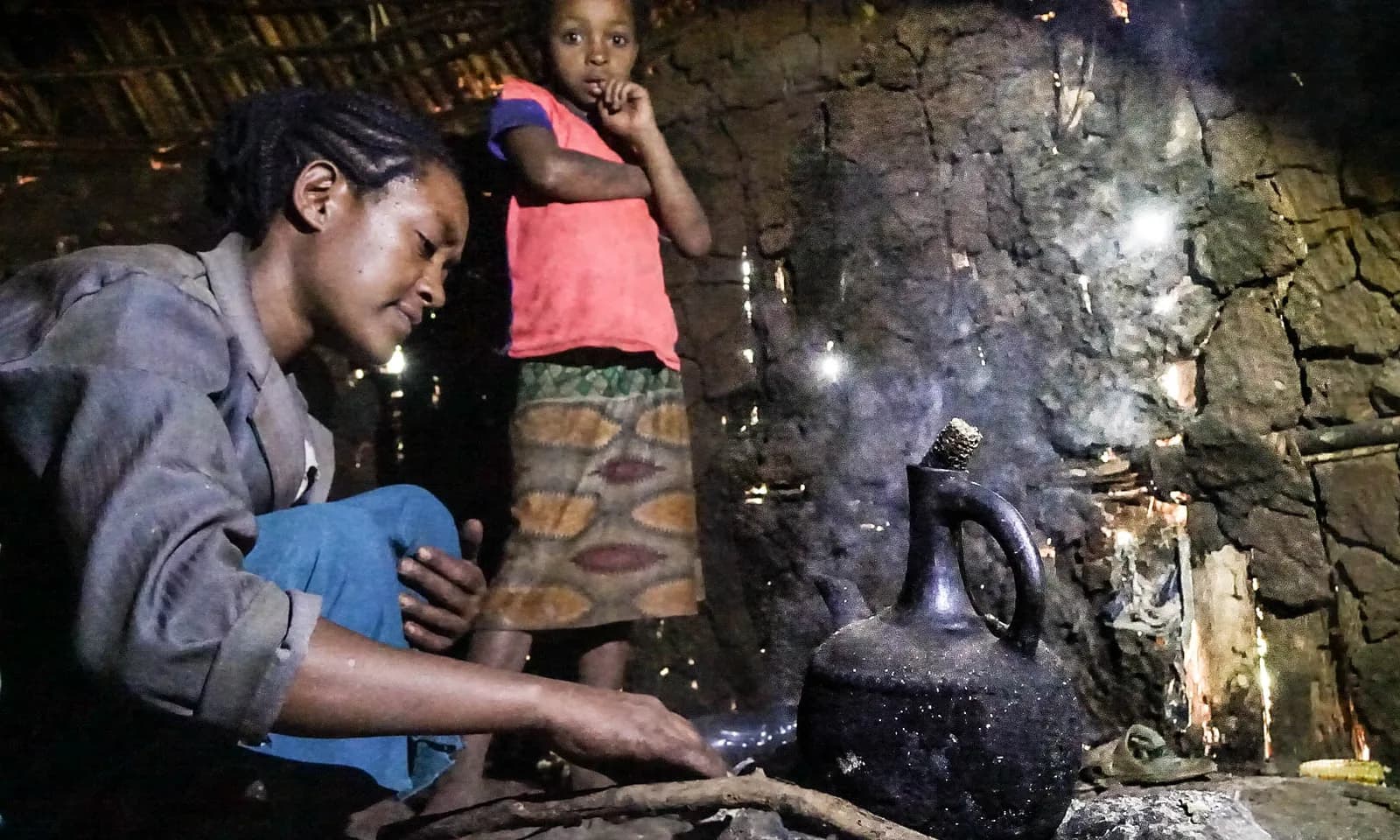
Kaffa coffee comes from the forested highlands of Ethiopia's Kafa Zone, where more of the crop grows under natural forest canopy than in any other Ethiopian origin. That production structure defines what you buy: earthy, spiced, dried-fruit cups at the commercial end, and clean, sweet, berry-toned washed and natural lots scoring 85 to 87 from managed estates like Bitta at the specialty end. For buyers in 2026, Kaffa's value lies as much in its EU Deforestation Regulation story as in its cup. Forest and semi-forest lots need geolocation and legality proof rather than deforestation risk, which makes Kaffa a strategic origin for roasters building EUDR-compliant supply. This guide covers the woredas, production systems, grades, traceability, FOB pricing, and the sourcing path.
Kaffa coffee sourcing guide: what importers, roasters, and green coffee traders need to evaluate, verify, and buy Kaffa lots from southwest Ethiopia. The Kafa Zone carries a reputation most origins would envy, since it lends its name to the drink and shelters the wild Arabica gene pool. But reputation does not fill a container. For a buyer, Kaffa is a specific supply proposition with its own woredas, grade mix, traceability challenges, and price band, and this guide treats it that way.
Kaffa sits in Ethiopia's southwestern cloud forest, roughly 460 kilometers from Addis Ababa around the town of Bonga. For the broader story of how Arabica evolved here, see our Ethiopian coffee origin guide. This article stays practical: it maps the growing areas, explains why the forest structure produces the cups it does, benchmarks grades and pricing, and shows how Kaffa's deforestation-free profile has become a commercial asset under the EU Deforestation Regulation.
Kaffa (also spelled Kafa or Keffa) is an origin designation for coffee grown in the Kafa Zone of the South West Ethiopia Peoples' Region. It is not a single farm, a single flavor, or a guaranteed specialty grade. It covers a spectrum from truly wild forest coffee, harvested by pickers moving through the understory, to managed estate lots grown under thinned canopy on defined blocks. Understanding where a given lot sits on that spectrum matters more for Kaffa than for almost any other Ethiopian origin.
The Kafa Biosphere Reserve, designated by UNESCO in 2010, covers 760,144 hectares and holds close to 5,000 wild Arabica types, according to the UNESCO Man and the Biosphere Programme. This genetic depth is why plant scientists treat Kaffa as a seed bank rather than just a supply region. The World Bank has documented the reserve as a living reservoir of disease- and climate-resistant Arabica lines. For a buyer, the practical read is that Kaffa lots are genetically diverse landrace populations, not uniform named varieties, which is exactly what gives its forest lots their unpredictable, layered character.
From origin: On offer sheets, "Kaffa," "Kaffa Forest," and "Bonga" are used loosely and sometimes interchangeably by exporters. Bonga is the zonal capital and the aggregation and cupping hub, much as Nekemte anchors Lekempti. A lot labeled "Bonga" is a Kaffa lot channeled through that town. Always confirm the woreda and, for specialty, the washing station or estate name, because the label alone does not tell you whether you are buying wild forest coffee or a managed-block lot.
Kaffa coffee reaches export markets primarily through four woredas (districts), each with a different balance of forest, semi-forest, and managed production. Targeting the woreda lets a buyer aim at a cup style and a traceability level rather than accepting undifferentiated zonal coffee.
| Woreda / Area | Altitude | Dominant System | Cup Character |
|---|---|---|---|
| Gimbo (near Bonga) | 1,700 to 2,100 masl | Semi-forest and washed stations | Clean, sweet berry, dried fruit, spice finish; strongest washed lots |
| Gewata | 1,600 to 2,000 masl | Forest and semi-forest | Earthy, herbal, wild fruit; classic foresty Kaffa profile |
| Decha | 1,500 to 2,100 masl | Forest, high wild-coffee share | Rustic, complex, dried fruit and cocoa; most variable |
| Bitta (Gesha Village-adjacent belt) | 1,900 to 2,050 masl | Managed estate under forest shade | Clean, structured, sweet; specialty micro-lots at 85 to 87 |
Gimbo, the woreda wrapping around Bonga, hosts most of Kaffa's organized washing capacity. The Matapa Michiti station near Gimbo, for example, processes JARC selections 74110 and 74112 both washed and natural on raised beds, and its Gimbo washed lots have earned specialty espresso scores in independent cupping reviews. Bitta stands at the opposite end of the spectrum: a managed estate spanning roughly 912 hectares at 1,900 to 2,050 meters under indigenous shade, running hundreds of drying beds and posting consistent 85 to 87 point lots. Between these poles, Gewata and Decha supply the earthy, wild forest coffee that gives the Kaffa name its character in the cup.
Production system is the single most useful lens for buying Kaffa. Nationally, Ethiopia's crop breaks down to roughly 50% garden, 35% semi-forest, 10% forest, and 5% plantation, according to Ethiopian Coffee and Tea Authority classifications. Kaffa inverts that national picture: forest and semi-forest coffee make up the majority of its output, which is why its cup profile and its sustainability story both differ from garden-dominated origins like Sidamo or Jimma.
Coffee grows wild or semi-wild under closed native canopy with no fertilizer, no pruning, and no irrigation. Pickers harvest from naturally occurring trees. Yields per hectare are low and cherry ripeness is uneven, which produces a rustic, layered, sometimes challenging cup. This is the most genetically diverse and the least controllable material you can buy in Kaffa.
Farmers thin the canopy, clear undergrowth, and manage naturally regenerating trees while adding minimal inputs. Ripeness and yield improve without losing the forest signature. Semi-forest lots deliver the best balance of the Kaffa character and cup consistency, and they anchor most of the region's exportable specialty and premium commercial volume.
Smallholder plots around homesteads, intercropped with enset and food crops. A smaller share of Kaffa output than in southern origins, but garden lots offer more predictable ripeness and form part of the general commercial grade pool channeled through Bonga.
Defined blocks under thinned forest shade with planted selections, structured harvesting, and dedicated processing, as at Bitta. This is where Kaffa produces its cleanest, highest-scoring, fully traceable lots. Volumes are limited and usually require advance reservation.
Forest and semi-forest coffee receives no synthetic fertilizer or pesticide, which means a large share of Kaffa output is effectively organic before any certificate exists. That lowers the barrier to organic and forest-linked certification, and unions like the Kaffa Forest Coffee Farmers Cooperative Union aggregate certified volume. For buyers, the practical gain is certified organic Kaffa at commercial-adjacent pricing, not the premium a garden origin would charge to convert.
Kaffa coffee is best known for an earthy, spiced, dried-fruit character with cocoa depth, a profile distinct from the citrus-floral brightness of Yirgacheffe or the stone-fruit intensity of Guji. Process choice then pushes that base in two directions: natural amplifies wild fruit and sweetness, while washed clarifies the cup into cleaner berry, black tea, and floral notes. Score ranges below reflect commercial-to-specialty Kaffa; top estate micro-lots sit above them.
Buyer's tip: Kaffa naturals reward roasters who want a recognizably wild, spiced Ethiopian cup that reads differently from the standard fruit-bomb natural. Cup them side by side with a Guji natural and the Kaffa will show more savory depth and less candied fruit. For a clean, floral washed lot at a lower entry price than Yirgacheffe, target Gimbo washed.
Kaffa follows the national Ethiopian coffee grading system, which combines physical defect evaluation with cup quality across grades 1 (highest) to 9. Most export Kaffa falls in Grades 2 through 5, with grade assigned separately for washed and natural. The forest and wild share of the crop means defect counts and screen uniformity run wider than in garden origins, so physical inspection matters as much as the cup on Kaffa lots.
| Grade | Processing | Defects / 300g | Cup Score | Availability |
|---|---|---|---|---|
| Grade 1 to 2 | Washed / Estate Natural | 0 to 12 | 85 to 87+ | Estate micro-lots (Bitta); advance reservation |
| Grade 3 | Washed & Natural | 13 to 25 | 82 to 85 | Standard specialty Kaffa; semi-forest lots |
| Grade 4 | Washed & Natural | 26 to 45 | 80 to 82 | Most common export grade; strong value |
| Grade 5 | Natural | 46 to 100 | 78 to 80 | Commercial forest lots; blend and volume stock |
| Specification | Standard |
|---|---|
| Moisture Content | 10.0% to 12.0% (target 11.0%) |
| Screen Size | 14 to 16 (forest lots run less uniform) |
| Packaging | 60 kg jute; GrainPro-lined for specialty lots |
| Certifications | Organic (USDA/EU), Fair Trade, forest-linked (station dependent) |
| Harvest | November to January (forest picking runs later) |
Because forest coffee ripens unevenly, expect wider defect variation between bags of the same Kaffa lot. Request a pre-shipment sample, cup it under SCA protocol, and check moisture and water activity plus physical defect count per 300g. On natural forest Grade 4 and 5, prioritize consistency and clean drying over chasing the highest cup note in a single cup.
Kaffa presents a paradox under the EU Deforestation Regulation (EUDR): the origin with the most forest coffee is also one of the better-positioned for deforestation-free sourcing. EUDR requires that coffee placed on the EU market be geolocated to its plot of production and proven free of deforestation after December 31, 2020. Forest and semi-forest coffee grown under standing native canopy is, by definition, not driving forest clearance, which is the opposite of the compliance risk buyers worry about with newly cleared farmland.
The catch is documentation, not land-use. Wild and forest lots aggregated from many pickers across a protected reserve are harder to geolocate to discrete plots than a mapped estate block. This is where Kaffa's supply structure splits sharply for EUDR purposes, and where the woreda and system you choose directly determine your compliance workload.
| Kaffa Supply Type | Deforestation Risk | Geolocation Difficulty | EUDR Read for Buyers |
|---|---|---|---|
| Managed estate (Bitta) | Very low | Low; mapped blocks | Strongest EUDR fit; plot polygons available |
| Semi-forest cooperative | Low | Moderate; smallholder plot mapping needed | Viable with union-level geolocation programs |
| Wild forest lots | Very low (protected canopy) | High; diffuse harvest area | Requires collection-area documentation and legality proof |
For a roaster with EU obligations, the practical strategy is to match ambition to supply type: buy mapped estate lots when you need airtight plot-level polygons, and work with cooperative unions that have invested in smallholder geolocation for semi-forest volume. Our EUDR compliance guide for Ethiopian coffee covers the due-diligence statement, geolocation data formats, and the current implementation timeline in detail. The point specific to Kaffa is that its forest heritage is a compliance advantage on land-use and a documentation project on traceability, and buyers should price both sides in.
Consider a mid-size UK specialty roaster buying two containers a year who wants a distinctive Ethiopian single origin that also tells a credible sustainability story to its wholesale cafe accounts. Yirgacheffe washed is on every competitor's menu, and garden-origin EUDR paperwork is a moving target. The roaster splits a Kaffa program: one mapped Bitta-style estate micro-lot at 86 points for the flagship washed single origin with plot polygons attached for EUDR, and one semi-forest natural Grade 3 from a Gimbo-area cooperative for a value forest offering carrying organic certification. The estate lot anchors the brand story and compliance file; the semi-forest lot delivers margin and volume. Both sit under standing forest canopy, giving the roaster a deforestation-free narrative competitors sourcing from cleared farmland cannot match.
Kaffa occupies a wide price band because it spans commercial forest lots and specialty estate micro-lots. Standard Kaffa trades above Jimma commercial coffee but below premium Yirgacheffe and Guji, while top Bitta-tier estate lots reach into specialty pricing on their own merit. Indicative FOB Djibouti ranges for the 2025/26 crop follow; actual prices move with grade, lot size, certification, and the C market. For pricing mechanics, see our Ethiopian coffee FOB pricing guide.
| Grade / Process | FOB Djibouti (USD/kg) | FOB Djibouti (USD/lb) | Notes |
|---|---|---|---|
| Estate Micro-lot (G1-2) | $6.50 to $9.00+ | $2.95 to $4.08+ | Bitta-tier; 85 to 87; advance reservation |
| Washed Grade 3 | $4.40 to $6.00 | $2.00 to $2.72 | Gimbo washed; clean floral berry |
| Natural Grade 3 | $4.00 to $5.60 | $1.81 to $2.54 | Best semi-forest naturals; fruity, spiced |
| Natural Grade 4 | $3.30 to $4.30 | $1.50 to $1.95 | Volume forest grade; blend depth |
| Natural Grade 5 | $2.70 to $3.50 | $1.22 to $1.59 | Commercial forest; blending stock |
Prices are 2025/26 crop-year estimates based on ECX-linked benchmarks and exporter quotations. Certified organic and forest-linked lots typically carry a premium of $0.20 to $0.50 per kg over the ranges shown.
Market read: Kaffa's value case for 2026 is not lowest price; Jimma wins on that. It is the combination of a differentiated forest cup, frequent default-organic status, and a deforestation-free EUDR story in one origin. To convert these FOB numbers into a warehouse-door figure, use our landed cost guide.
Sourcing Kaffa follows the standard Ethiopian export path, detailed in our export process guide, with Kaffa-specific steps around production system and traceability. The workflow below is written for a first Kaffa order.
Before grade or price, decide whether you want a mapped estate lot, a semi-forest cooperative lot, or commercial forest volume. This choice sets your cup style, your price band, and your EUDR documentation load. Specify Gimbo for washed, Gewata or Decha for foresty naturals, Bitta-tier for specialty.
Ask for 200g to 500g green samples of current-crop Kaffa. Request type samples (grade-representative) and, for specialty, spot samples of the specific estate or station lot you would contract. For forest lots, ask how many bags the sample represents, since consistency across the lot is the main risk.
Evaluate under SCA protocol for the spiced, dried-fruit Kaffa signature, and score defect count, screen uniformity, and moisture. Forest lots need a harder physical look than garden origins.
If you need organic or forest certification, verify the certificate covers the specific lot, not just the union. For EU shipments, request geolocation data appropriate to the supply type and confirm it matches EUDR formats before contracting.
Agree price, Incoterms (FOB Djibouti or FCA Addis), and payment terms. Approve the pre-shipment sample before dry milling and export prep begins; it must match your contracted grade, moisture, and cup.
Kaffa moves overland to Djibouti, then by sea to destination. Note that forest picking runs later than garden harvest, so fresh Kaffa export windows can lag other origins by weeks; build that into contract dates. Request GrainPro liners for specialty lots.
Ethio Coffee Import and Export PLC sources washed and natural Kaffa lots, including semi-forest and certified organic volume, through our heritage network of cooperatives and washing stations around Bonga. Request samples, current offer sheets, or EUDR-ready traceability documentation for your program.
Kaffa coffee is earthy and spiced with dried fruit and cocoa depth. Naturals show wild berry, dried fig, and warm spice with a long sweet finish, while washed lots are cleaner and more floral with red berry, bergamot, and black tea notes. It reads as more savory and rustic than the bright citrus-floral profile of southern Ethiopian origins.
Yes on land-use, with a caveat on paperwork. Forest and semi-forest Kaffa grows under standing native canopy, so it does not drive deforestation, which is the core EUDR concern. The challenge is geolocation: mapped estate lots supply plot polygons easily, while diffuse wild-harvest lots need collection-area documentation. Match the supply type to your traceability needs.
They refer to the same origin. Kaffa is the zone; Bonga is its capital town and the aggregation and cupping hub. A lot labeled "Bonga" is Kaffa coffee channeled through that town, much as Lekempti coffee is named for Nekemte. For traceability, confirm the woreda and washing station rather than relying on the town name.
Yes. Managed estates such as Bitta produce washed and natural micro-lots scoring 85 to 87, and semi-forest Grade 3 lots from the Gimbo area cup 82 to 85. Specialty Kaffa volumes are limited and usually require advance reservation, so contact exporters early in the crop year to secure allocation before it sells out.
Frequently, and often at a modest premium. Because forest and semi-forest lots use no synthetic inputs, much of Kaffa's output is effectively organic before certification, and cooperative unions aggregate USDA and EU Organic volume. Always confirm the certificate covers the specific lot you are contracting, not just the union as a whole.
About This Insight: Written by Ethio Coffee Import and Export PLC, an origin-connected Ethiopian coffee exporter with three decades of sourcing relationships across Yirgacheffe, Sidamo, Guji, Harar, Limu, Jimma, and Kaffa.