
Your cart is empty
Browse OfferingsLicensed & Affiliated


Ethio Coffee Import and Export PLC is a family-owned Ethiopian coffee exporter shipping green coffee beans to roasters, importers, and distributors worldwide.
© 2026 Ethio Coffee Import and Export PLC. All rights reserved.
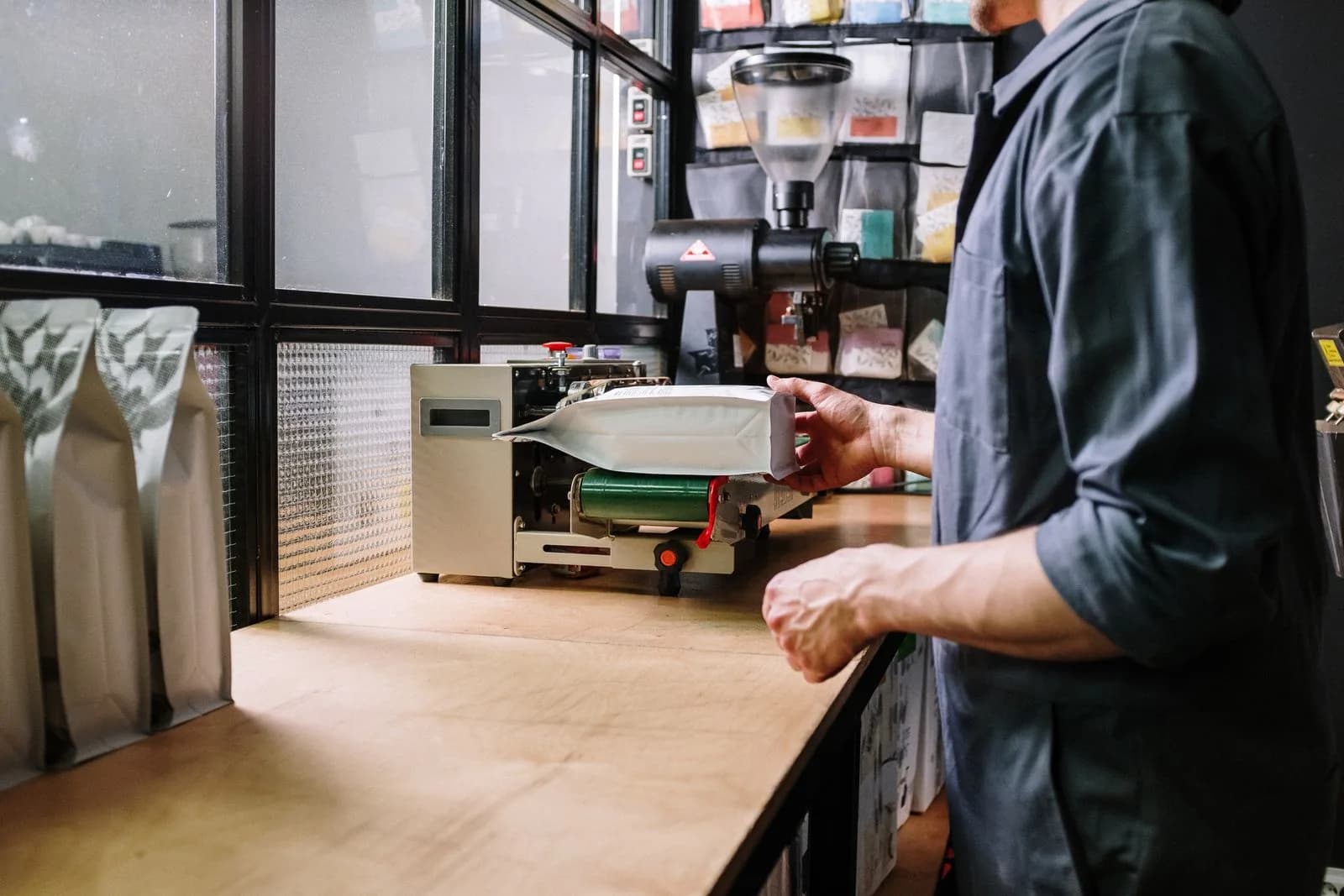
A wholesale customer says your Ethiopian single origin has lost its aroma, although the same roast tasted right before packing. Coffee packaging quality control gives you a way to investigate that gap before blaming the green lot or replacing the bag. The useful evidence includes the filled package, the test method, and the production interval covered by the result. A photograph of an intact pouch or one low oxygen reading leaves too many questions unanswered.
Release a packing run against an approved package specification, valid oxygen measurements where required, seal and valve checks, and identifiable production records. Set limits for the actual coffee, bag, machine, and distribution conditions. When a check fails, contain the uncertain production interval and document its disposition. Qualify shelf life separately with retained finished packs and sensory evidence.
Coffee packaging quality control verifies that a defined packing process produces packages meeting agreed requirements. Each check answers a different question. Keep those questions separate when deciding whether to dispatch coffee, investigate a complaint, or approve a new pouch.
| Evidence | Question answered | Decision still needed |
|---|---|---|
| Material specification | Which film, valve, and construction were supplied? | Does the filled package perform on this line? |
| Headspace gas result | What gas concentration did this method measure at this time? | Were sampling and timing valid, and are other checks satisfactory? |
| Seal and leak tests | How did the tested pack perform under the specified test? | Which production interval does the sample represent? |
| Retained-pack trial | How did identified packs and coffee change under recorded conditions? | Do those conditions support the intended distribution and quality claim? |
A supplier certificate describes the supplied material within its stated scope. Your closing seal, filling conditions, and handling still need review. Similarly, a satisfactory sampled pack supports the control plan; it cannot certify every untested bag by itself. Record enough detail to explain why the sampling plan is appropriate for the run.
Approve the coffee, package, filling process, and quality requirements together. A bag catalog entry alone cannot define the conditions under which your finished product will work. Give the packaging supplier and any co-packer the same brief.
Include whole bean or ground format, nominal fill weight, bag dimensions, valve design, closing-seal location, roast-to-pack interval, and any protective-gas process. Describe the intended distribution route, storage conditions, and quality period you plan to substantiate. Record the approved material revision and supplier lot on the production sheet.
Request oxygen and water-vapour transmission data with the test conditions and units attached. Film data and finished-pack results answer different questions. Ask which seal tests, valve tests, and food-contact documents the supplier provides, then agree what your roastery or external laboratory must verify.
For pre-made pouches, assign responsibility for the seams supplied with the pouch and the final seal made after filling. For contract packing, agree who sets the checks, retains samples, investigates deviations, and authorizes release. Keep the test records accessible to your business rather than accepting a delivery note marked only "QC passed."
Avoid carrying machine settings from an old film directly into a replacement bag. Make a documented trial part of the change approval. Review the specification again when the fill weight, valve, material, machine, or product format changes.
A residual oxygen result is useful when the instrument, sampling method, and time after sealing match the approved procedure. Residual oxygen means the oxygen remaining in the package atmosphere at measurement. It is a concentration reading, not a complete record of the coffee's oxygen exposure.
ROVEMA's Packaging of Coffee guide, reviewed in October 2026, describes protective gassing and application-dependent residual oxygen requirements. Its practical implication is to establish a requirement for your process. Do not adopt a number from another pack format as a universal coffee standard.
Define the elapsed time from sealing to testing, and record the actual time. Use the same approved sampling approach for results you intend to trend. A reading collected immediately after filling and one collected after storage belong to different checkpoints.
Record the instrument ID, verification status, pack ID, sampling position, oxygen result, and any invalid-test indication. Follow the analyzer instructions for sample volume, puncture sealing, and protection against ambient air entering the sample. A displayed number should not override a failed sampling step.
Rey and Pétry's 2023 IMEKOFOODS oxygen-measurement abstract identifies minimum headspace as sensor-dependent. Confirm method suitability for small or tightly filled bags with the instrument provider or laboratory. An analyzer that works on a large pouch may need a different approach for limited headspace.
Treat low oxygen as one observation in the release record. Gas concentration can change as roasted coffee releases gas, so a later low percentage does not reconstruct the atmosphere at sealing. It also does not establish that a seal is leak-free or that the coffee still meets its sensory specification.
Investigate unexpected results before increasing gas flow. Check measurement validity, product timing, bag presentation, filling settings, and the package itself. Keep individual results visible; a run average can hide the particular bag that exceeded the approved action limit.
Verify both package integrity and the intended gas-release function using methods suited to the bag. A degassing valve provides a designed route for gas release, while a leaking seam is an unintended opening. Your test procedure must distinguish them.
Fres-co's December 2022 coffee packaging QC overview identifies materials, valves, and seals as separate checks and discusses gas analysis. Use that separation when briefing a testing provider. Obtain a method appropriate to your finished pouch rather than treating a visual inspection as the whole test.
At startup, inspect the closing area for trapped product, wrinkles, misalignment, and inconsistent sealing. Confirm the approved setup, including the applicable temperature, pressure, dwell time, or line-speed controls. Record the settings actually used and any adjustment during the run.
Ask the supplier or laboratory to define how seal strength and leak integrity will be assessed. Record the test location, conditions, acceptance rule, and result. Specify how the valve is handled during an integrity test so intended venting is not mistaken for a failed seam. Do not improvise pressure settings or alter valves on saleable packs.
Keep destructive test units out of finished stock. If a bag is punctured, immersed, stressed, or otherwise compromised by testing, account for it as a test withdrawal. A handwritten "passed" label does not restore that unit to its original package condition.
Release requires a review of the specified checks and any deviations for the covered production interval. When a check fails, hold the coffee whose status is uncertain while the team investigates. A successful restart check establishes the restart condition; held output still needs its own disposition.
Set check frequency through the approved control plan. Include startup, relevant interruptions, adjustments, and material changes as review points. Identify sampled bags by production sequence or time so the last satisfactory check can be connected to physical stock.
Use the coffee roastery traceability records to locate affected stock and dispatches. This packing decision needs the run boundary and package history; the broader tracing system supplies the destinations.
Consider a fictional roaster packing an Ethiopian single origin into 1 kg bags in October 2026. The last satisfactory recorded check covers output through bag 200. A seal check fails at bag 320, and the line stops. Records cannot establish a narrower onset, so bags 201 through 320 enter the hold.
The affected interval contains 120 units, representing 120 kg of nominal packed coffee. Actual stock reconciliation identifies 116 intact units in held cartons and four withdrawn test units. If none has shipped, that is the complete unit-accounting task for this interval. Actual weights and test withdrawals remain in their own records.
After correcting the setup, the team verifies the restart under its procedure. The 116 intact units remain blocked until an authorized reviewer approves disposition. If re-packing is approved, the new run receives its own checks and remains linked to the original coffee. These quantities illustrate the decision; they are not a recommended sampling frequency or reported customer results.
The commercial value lies in defining how much coffee needs assessment. If records cannot separate bags 201 through 320 from earlier cartons, the hold may need to widen. Clear intervals help buyers evaluate rework, stock availability, and replacement commitments without guessing from the full day's production.
Qualify a package using the intended coffee and production process, with identified unopened packs reserved for planned observations. Production checks confirm run conformity. A qualification trial examines whether the product and package continue to meet the intended quality requirements over time.
Write the trial plan before filling. Specify roast batch, bag revision, fill weight, roast-to-pack timing, sealing setup, gas process, storage conditions, review dates, and acceptance criteria. Reserve separate packs for destructive measurements and tasting at each checkpoint. Repeatedly opening one pouch changes the condition you are trying to assess.
Record an initial sensory baseline using the intended product evaluation method. Keep roast preparation consistent; the roast color measurement protocol helps define one production variable. Use a documented tasting method and the cupping team calibration procedure when investigating changes in the cup.
At each planned review, record package condition, the prescribed instrumental checks, and sensory findings. Keep storage logs attached. If transport handling is part of the intended use, include an agreed distribution trial rather than assuming a quiet office shelf represents that route.
A film transmission value or a passing oxygen test does not set a best-before date by itself. Base the proposed quality period on the relevant evidence and review changes that could invalidate it. An accelerated study needs a justified relationship to actual storage; simply using a hotter room does not create a defensible conversion into months.
Preserve the green-lot baseline and packing history so a quality complaint can be investigated across the handoff. Changing the coffee and the bag together makes attribution difficult. An origin-connected exporter can help with identified lot information; finished-pack evidence belongs with the roaster and packaging team.
Three requests belong in an Ethiopian sourcing and packaging trial. They are recommended checkpoints to agree with the exporter, rather than claims that every supplier already provides the same records:
For an exporter inquiry, send the lot reference, receiving assessment, roast batch, packing date, retained-pack findings, and discovery conditions. Include observations from the coffee before packing where available. Separate measured facts from proposed causes so the origin team receives a question it can investigate through the sourcing network.
Build these requirements into the Ethiopian sample approval record before committing the selected lot to a wholesale program. A successful cup evaluation establishes a buying baseline; the filled-pack trial checks whether your production route preserves the intended product.
Coffee packaging quality control works when each result answers a defined question and leads to a recorded decision. Agree the specification, make measurements valid, contain uncertain output, and review unopened retained packs over the intended quality period. Those steps give a wholesale customer and an Ethiopian sourcing team evidence they can use.
Share your product format and trial requirements with Ethio Coffee. Discuss available samples and lot information so your buying, roasting, and packing teams can evaluate the same coffee.
No. A headspace result describes gas concentration under a particular sampling method at a recorded time. It does not independently establish seal integrity, valve performance, or sensory shelf life. Review it alongside the approved package tests, measurement validity, and production records before making a release decision for the packing run.
Measure at the elapsed time defined in the approved procedure and record the actual interval from sealing. Use a method suitable for the package and available headspace. Immediate production checks and later retained-pack checks answer different questions, so keep their results separate when reviewing trends or investigating a deviation.
Yes. A valve creates an intended gas-release route, which the test method must distinguish from an unintended seam leak. Agree the procedure with the packaging supplier or testing laboratory, including valve treatment and test conditions. Keep altered or destructively tested packs out of saleable stock and record their withdrawal.
Record the coffee and packaging lots, roast and packing times, fill format, machine setup, test method, instrument status, individual results, and covered production interval. Add deviations, held quantities, corrective actions, and authorized disposition. The record should let another person identify which finished units were released and why that decision was justified.
Run the intended coffee through the proposed packing process under a written trial plan. Retain separate unopened packs for scheduled package and sensory checks under recorded storage conditions. Establish an initial quality baseline, document acceptance criteria, and review relevant material or process changes before extending approval to further production.
About This Insight: Written by Ethio Coffee Import and Export PLC, an origin-connected Ethiopian coffee exporter. Published Oct 13, 2026. The worked scenario is fictional. Adapt these proposed records to your package, equipment instructions, and approved quality system. Contact our team for current lot availability and documentation.