
Your cart is empty
Browse OfferingsLicensed & Affiliated


Ethio Coffee Import and Export PLC is a family-owned Ethiopian coffee exporter shipping green coffee beans to roasters, importers, and distributors worldwide.
© 2026 Ethio Coffee Import and Export PLC. All rights reserved.
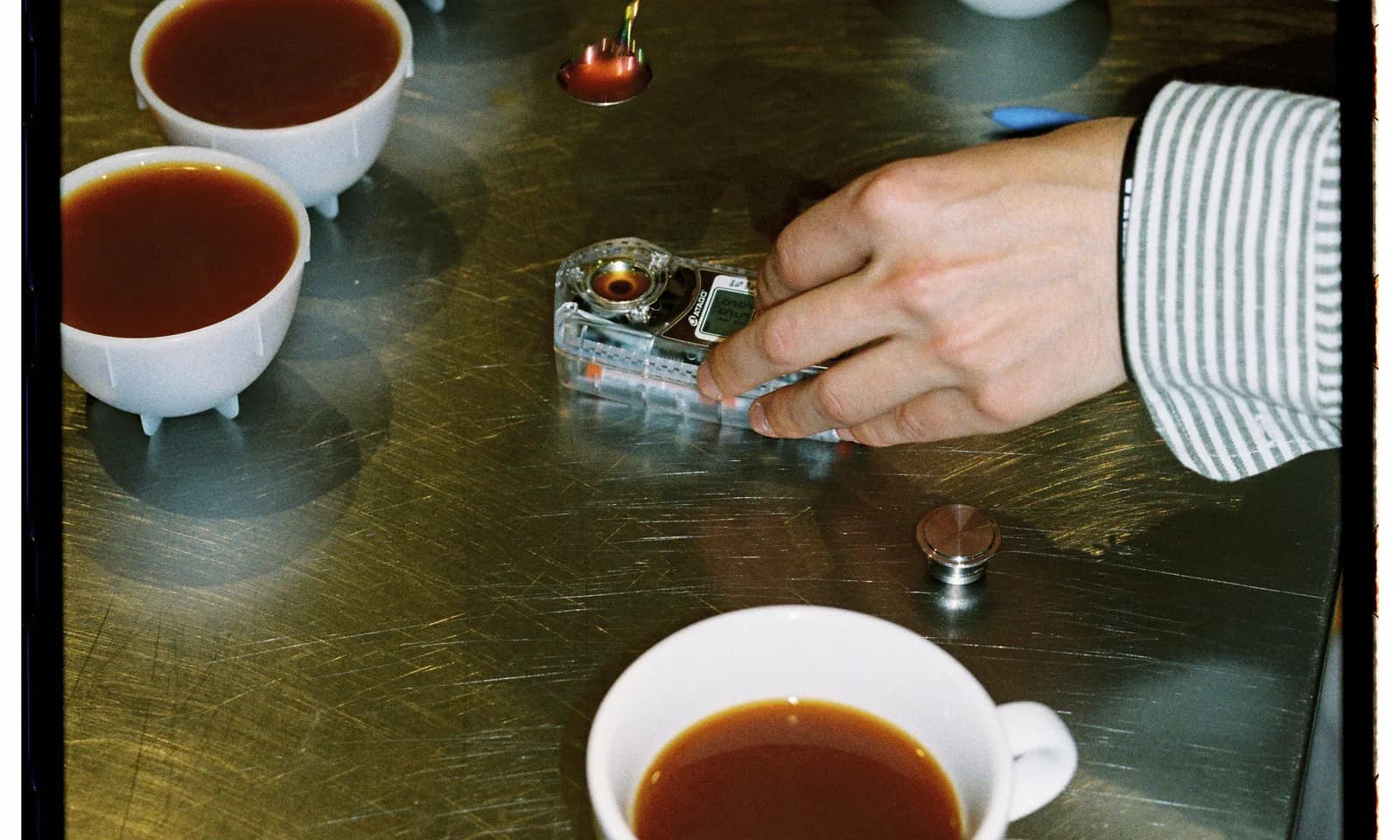
Coffee cupping calibration turns several individual opinions into one dependable buying system. Run blind sessions with controlled preparation, one stable reference coffee, one duplicate cup code, independent scoring, and a structured discussion only after forms are locked. Track score spread, duplicate repeatability, descriptor alignment, and defect detection. Investigate drift before the panel approves a pre-shipment sample or rejects an arrival lot.
A buying team can follow the same brew recipe and still disagree enough to approve the wrong coffee. One cupper scores acidity intensity while another scores how much they like it. A third knows the supplier's score before tasting and unconsciously moves toward it. Coffee cupping calibration is the control that exposes those differences before they affect a contract, product launch, or quality claim.
This protocol is for importers, roaster buying teams, exporter labs, and quality managers. It assumes the team already knows basic cupping mechanics. If not, begin with the Ethiopian coffee cupping guide and standardize sample roasting with the green coffee sample roasting protocol. The work here starts after the bowls are prepared correctly.
Calibration does not force every cupper to have the same preferences. It makes the panel consistent about the question being answered, the language being used, and the evidence needed for a decision. A green buyer may personally prefer a fruit-forward natural while accurately describing a washed lot that better fits the company's filter program. Preference and description can coexist when the form keeps them separate.
The commercial risk appears at three gates. Offer cuppings decide where sample and negotiation time goes. Pre-shipment cuppings authorize a specific lot to move. Arrival cuppings help determine whether the landed coffee remains within the agreed sensory range. A panel that drifts by two points or uses descriptors inconsistently can turn normal variation into a rejection, or let a material change pass unnoticed.
| Buying gate | Calibration question | Failure if the panel drifts |
|---|---|---|
| Offer sample | Can the team describe fit and quality consistently? | Good lots are missed or weak lots consume buying time |
| Pre-shipment sample | Does the final lot meet the written approval rule? | Shipment is released on unstable evidence |
| Arrival sample | Is the change real, repeatable, and commercially material? | A valid claim is weakened or a false claim is raised |
Write the session purpose at the top of every form. Selection, descriptive profiling, quality impression, defect screening, and contract acceptance are different tasks. Combining them into one vague instruction such as "score these coffees" guarantees disagreement that discussion cannot repair.
The Specialty Coffee Association now organizes Coffee Value Assessment around physical, descriptive, affective, and extrinsic assessments. The SCA Coffee Value Assessment resources explain that descriptive assessment records sensory attributes, while affective assessment records an evaluator's impression of quality. SCA-102, SCA-103, and SCA-104 replaced the 2004 form and protocol as the official cupping standards in November 2024. Record which standard and form version your team uses.
A practical buying session can use both assessments, but the team should finish its descriptive observations before discussing preferences or commercial fit. Use the World Coffee Research Sensory Lexicon when a descriptor needs a defined reference. Its 110 aroma, flavor, and texture attributes give the team a common vocabulary without declaring that one attribute is better than another.
Calibrate to a documented method and business decision, not to the most senior person's palate. The panel lead protects the process, reveals codes, and facilitates evidence review. The lead's score is another observation, not the answer key.
Use four to six coded coffees. A table of only excellent, similar lots may feel productive while revealing little. The flight should span the decisions your team actually makes: a clear pass, a boundary coffee near the buying threshold, a profile mismatch, and a coffee with a known sensory concern. For Ethiopian buying, include washed and natural lots only when the session brief defines the expected profile for each.
Add one duplicate by splitting the same roasted sample under two codes. No participant should know which codes repeat. The duplicate tests repeatability inside one session. Keep one stable reference coffee in frozen, sealed portions or another validated storage format and use it across sessions while its condition remains suitable. The reference helps reveal movement over time; it is not a universal score standard.
Control before tasting
Do not use as an answer key
Record the sample codes, roast code, days off roast, grinder setting, water identifier, water temperature, dose, vessel volume, pour time, break time, room conditions, form version, and panel roster. These variables belong in the same controlled record used for offer, pre-shipment, and arrival sample approval.
Qualify the water before using a session to assess panel agreement. Our cupping water testing and batch-release protocol connects the water identifier to measured chemistry and documents when a water deviation requires a retest.
Discussion is part of calibration, but timing matters. Early discussion creates agreement without proving independent alignment. Silent scoring first preserves the information needed to tell whether the team already agrees, learns from evidence, or merely follows a confident speaker.
Calibration needs a trend, not a pass badge. Track the measures below by cupper, coffee, attribute, and session. Use the median when one extreme score would distort a small panel. Keep the raw data so a quality manager can separate a difficult sample from a drifting evaluator.
| Measure | Simple calculation | What it reveals |
|---|---|---|
| Panel spread | Highest score minus lowest score for one coffee | How far the panel's quality judgments separate |
| Cupper bias | Cupper score minus panel median across the flight | A stable tendency to score high or low |
| Duplicate gap | Absolute difference between hidden duplicate scores | Within-session repeatability |
| Descriptor agreement | Share of cuppers selecting the same primary category | Whether the team speaks at a useful category level |
| Defect detection | Correct detections and misses for seeded or known samples | Readiness for rejection and claim decisions |
Suggested internal alert limits, not SCA requirements
A buying team can begin by reviewing any coffee with more than a 1.5-point total-score spread, any cupper whose average bias exceeds 1 point across a flight, or any hidden duplicate gap above 1 point. Treat these as investigation triggers, not automatic failures. Adjust them after enough sessions show the normal variation of your panel and form.
A score gap is a symptom. Start with preparation. Check sample identity, roast uniformity, cup placement, dose, grinder purge, water, pour sequence, broken crust, and transcription. If only one bowl is inconsistent, investigate the bowl before the person. If every cupper scores one table unusually, the reference coffee or preparation may have changed.
Next, isolate the sensory task. A descriptor problem calls for aroma or taste references. A quality-impression gap calls for blind boundary coffees and a clear market brief. Missed defects call for controlled defect training and confirmation that the suspected taint appears across enough bowls. Persistent high or low scoring may require an external calibration sample rather than more internal discussion.
Health, fatigue, recent food, medication, and strong ambient odors can temporarily change performance. Allow a cupper to declare themselves unavailable without penalty. Removing one unreliable result is cheaper than forcing consensus into a shipment decision.
Cross-lab calibration begins with shared coffee, shared sample identity, and a shared question. Ask the exporter to split one homogenized sample, seal both portions, and record the lot and sample stage. Each lab roasts and cups independently, then exchanges the preparation record, descriptive results, quality impressions, and defect observations. Do not exchange only a total score.
Lab conditions will not be identical. Water chemistry, grinder geometry, sample roaster, roast development, elevation, rest time, and panel preference can create a stable offset. The objective is to understand that offset and detect when it changes. Three shared flights across a season are more informative than one large meeting because they reveal repeatability over time.
For Ethiopian lots, send origin and buyer feedback at the same descriptor level. "Floral" is more reproducible than an unsupported list of specific flowers; "fermented, high intensity, present in four of five bowls" is more actionable than "funky." Connect all feedback to the lot code and sample stage already defined in the green coffee specification sheet.
Small teams can use the same cadence. Two cuppers, a hidden duplicate, and periodic third-party shared samples produce better evidence than a larger table with no records. When one person makes the final buying decision, preserve an independent second result for boundary lots and arrival disputes.
Use one row per cupper and coded coffee. Keep the identity key on a separate page until forms are locked. A spreadsheet can calculate the panel median, spread, cupper bias, and duplicate gap automatically.
| Field | Record |
|---|---|
| Session control | Date, purpose, lead, form and version, room, water, grinder, roast code |
| Sample control | Blind code, lot code in separate key, sample stage, duplicate pair, reference status |
| Individual result | Cupper, descriptors, intensities, affective scores, defects, decision, confidence |
| Panel result | Median, score spread, primary descriptor agreement, defect detection |
| Cupper result | Bias across flight, duplicate gap, missed reference, prior trend |
| Action | Preparation check, reference training, shared sample, owner, due date, closure evidence |
Make the commercial decision only after confirming sample identity, preparation validity, panel readiness, and the contract criterion. If the panel exceeds its alert limit, repeat the controlled test or obtain an independent result. Never average an obvious preparation error into a pass.
Coffee cupping calibration is a controlled process for checking whether evaluators apply the same method, understand sensory terms consistently, repeat their own results, and make dependable quality decisions. It uses blind samples, references, duplicate codes, independent forms, performance measures, and corrective practice rather than simply discussing scores around a table.
Place a hidden duplicate in routine cuppings weekly, run a dedicated internal flight monthly, and review performance trends quarterly. Calibrate with important suppliers at least once each buying season. Increase the frequency after staff changes, equipment changes, persistent score drift, or before decisions involving a high-value shipment or quality claim.
No. Sensory judgments contain normal human variation, and quality impressions may reflect different market preferences. A calibrated panel shows controlled, explainable variation, repeats results within its established limits, agrees on important descriptor categories and defects, and reaches the same commercial decision when applying a written acceptance rule.
A hidden duplicate is one roasted coffee divided and presented under two unrelated blind codes in the same flight. The absolute difference between each cupper's two results measures within-session repeatability. A large gap triggers a preparation, attention, or sensory review; it should not be concealed by the panel average.
Both labs receive sealed portions of one homogenized, identified sample and assess it independently under documented conditions. They then exchange preparation records, descriptors, quality impressions, and defect findings. Repeating shared flights across a season reveals a stable laboratory offset and makes unusual divergence easier to investigate.
A disciplined coffee cupping calibration program does not eliminate judgment. It makes judgment traceable. Blind work protects independence, duplicate codes expose repeatability, shared references strengthen language, and trend data tells the quality manager when a result needs investigation. That is the level of evidence a buying team needs before a score becomes a purchase, release, or claim decision.
Request traceable offer samples with lot details and origin-side cupping records. Ethio Coffee can support shared-sample calibration so your buying team understands the profile before contract and shipment approval.
Cupping and Sample Control
About This Insight: Published on Sep 4, 2026 by Ethio Coffee Import and Export PLC, an origin-connected Ethiopian coffee exporter. Suggested alert limits are internal starting points, not SCA standards or contract terms. Validate the method and limits for your panel before commercial use.