
Your cart is empty
Browse OfferingsLicensed & Affiliated


Ethio Coffee Import and Export PLC is a family-owned Ethiopian coffee exporter shipping green coffee beans to roasters, importers, and distributors worldwide.
© 2026 Ethio Coffee Import and Export PLC. All rights reserved.
Follow Ethiopian green lots through roasting, blending, packing, and wholesale delivery with a practical mock recall.
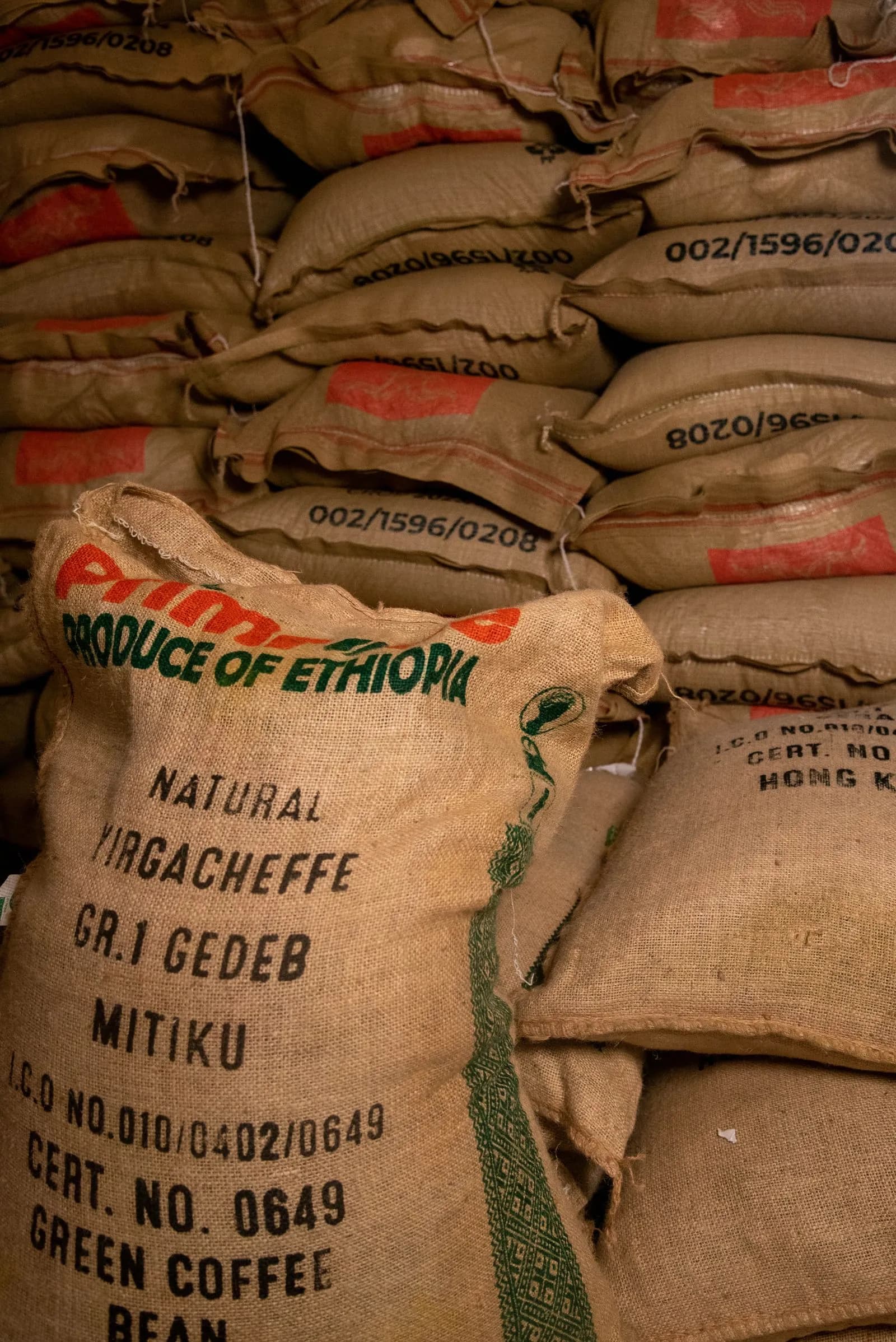
A wholesale customer sends a photograph of a bag code and asks which green coffee went into it. Coffee roastery traceability should let your team answer from records, even when the head roaster is away. The harder question follows: which other bags, blends, and deliveries used that same lot? A mock recall tests both directions before a real incident forces the answer.
Connect each supplier lot to its receiving record, roast batches, blend batches, packaging codes, and shipment lines. Test the chain with a mock recall that identifies every affected product and reconciles quantities at each processing stage. Record unresolved gaps, assign corrections, and repeat the failed part of the exercise before closing it.
Coffee roastery traceability is the recorded link between incoming coffee lots, production events, finished products, and their destinations. Each event needs an identity, a quantity, and a connection to the next event. A roast profile describes how you roast; a roast batch identifies one execution of that profile.
Start with the physical route coffee takes through your building. Include temporary totes, shared silos, grinding, sample withdrawals, contract packing, and stock sent to your own cafés. Every place where coffee is divided, combined, or given a new label needs a recorded connection.
| Record | Keep these fields together | Next connection |
|---|---|---|
| Green receipt | Supplier lot, internal lot, receipt date, actual net weight, location | Green withdrawals by roast batch |
| Roast batch | Unique batch ID, input lots and weights, output weight, machine, time | Tote, blend, or packaging run |
| Blend batch | Actual component batch IDs, weights, recipe revision, output ID | Every packing run supplied |
| Packed lot | Printed code, input batch IDs, SKU, pack size, unit count, packaging lot | Stock location and dispatch line |
| Dispatch | Packed lot, units shipped, order, recipient, destination, date | Customer contact and delivery evidence |
The GS1 Global Traceability Compliance Criteria Standard, release 4.1 (2021), addresses records linking transformation inputs and outputs, product identifiers, quantities, and trading partners. Apply that linking principle to coffee handling. Buying a barcode printer alone does not create the missing relationships.
Keep IDs stable when product names change. A seasonal coffee can move from a named single origin into a house product without losing its original lot identity. Retain dated corrections and the person who made them; overwriting an old batch with a new recipe makes historical tracing unreliable.
Preserve the supplier's lot reference alongside your internal warehouse code. Ask for clarification while bags and documents are still available at receiving. A regional name such as Guji can appear on several purchases and cannot identify which physical delivery supplied a roast.
Three origin handoff checks deserve a place in the buyer's specification. They are practical record requests for the exporter and roaster to agree before production begins:
Use the green coffee bag markings checklist to verify the physical sack identity; this article follows that identity into production. Resolve missing mappings before consolidating similar lots into a common bin.
For an Ethiopian supplier inquiry, send the exact received lot, purchase reference, delivery date, and affected production IDs. Attach the relevant bag photograph and source record. This lets an origin-connected exporter investigate a defined allocation through its sourcing network without guessing from tasting notes or a retail product name.
Record actual material movements as they happen. Recipe percentages and scheduled quantities cannot prove which beans entered a particular batch. The most useful checks sit at the moment an operator pours, blends, packs, or relabels coffee.
Adding a new batch to a partly filled tote creates a mixture with more than one parent. Give that mixture an identifiable record and retain every contributing batch. If operators cannot establish when the earlier coffee cleared, include the uncertain output window in the investigation.
For a blend assembled after roasting, record the weighed roasted components. For coffee blended before roasting, record each green component entering the charge. The same menu name can continue through a component change, so link each physical blend to the recipe revision actually used.
Every packed code must resolve to the batch or batches that filled it. Capture the start and end of the run, and record a code change when your lot policy requires it. Repacking creates another event connecting the old packed identity to the new one.
Attach packaging check results to the production interval they cover. The coffee packaging quality control workflow explains how oxygen, seal, and valve checks support a release decision and how a failed check defines stock that needs assessment.
Record coffee sent for cupping, staff use, or wholesale samples as withdrawals with a destination. Keep returns identified and segregated pending an authorized decision. Unrecorded small withdrawals can become the unexplained balance that prevents a drill from closing.
Cropster's Roast Traceability Report documentation, updated April 2026, illustrates how roast and post-roast blend records can connect transaction histories with completed orders. Whatever system you use, test that the person covering a shift can retrieve those links and identify the actual customer order.
A mock recall is a controlled exercise that tests how completely your records locate potentially affected coffee. Choose a starting record without preparing the answers for the tracing team. Use the exercise to expose missing links and measure retrieval time.
Assign a drill coordinator, someone to trace production, someone to reconcile stock, and someone to review customer records. Small teams can combine roles, but a second person should check the result. Mark every exercise document clearly as a simulation and agree how any external participation will be handled.
The Canadian Food Inspection Agency's recall procedure guidance (2023) covers affected-product identification, stock segregation, distribution lists, and effectiveness checks. It also highlights packaging materials as a possible recall source. Use the requirements applicable to your business for real incidents, including notification obligations; this operational exercise does not set a universal legal deadline.
A passing trace identifies where coffee went. Whether that coffee needs a recall, and how widely to act, requires the responsible team to evaluate the incident. If the exercise uncovers a real safety concern, move into the established incident procedure immediately.
Reconcile physical coffee at each transformation before calculating the affected finished stock. Roasting changes mass, and blending adds mass from other lots. The quantity of a green ingredient cannot stand in for the quantity of every finished product containing it.
Consider a fictional wholesale roaster supplying cafés with an Ethiopian single origin and a house blend. The following figures are an illustrative calculation prepared by Ethio Coffee in October 2026, not customer results or industry loss benchmarks. The exercise starts with green lot ETH-26-041.
| Stage | Recorded movement | Reconciliation |
|---|---|---|
| Green receipt | 600 received; 240 remain green; 360 charged to roasts | 600 = 240 + 360 |
| Roasting | 360 green produces 306 roasted; measured mass difference 54 | 360 = 306 + 54 |
| Roasted allocation | 180 single origin; 120 blend input; 6 recorded QC withdrawals | 306 = 180 + 120 + 6 |
| Single-origin packing | 178 packed; 2 measured packing waste | 180 = 178 + 2 |
| Blend production | 120 Ethiopian coffee + 280 other roasted components | 400 = 120 + 280 |
| Blend packing | 396 packed; 4 measured packing waste | 400 = 396 + 4 |
| Finished distribution | 450 shipped; 124 in finished stock | 574 = 178 + 396 = 450 + 124 |
The tracing result includes 574 kg of packed coffee: all 178 kg of single origin and all 396 kg of the blend. The Ethiopian component represents 30% of the blend input, but every bag from that blend run contains the component. Multiplying finished blend stock by 30% would understate the product requiring assessment.
Split the 450 kg shipped into dispatch lines by packed code and recipient. Count the 124 kg still in finished stock by location. Keep the 240 kg of remaining green coffee on the scenario's stock list, with its own status. The QC withdrawals also need recorded destinations; a sample sent outside the business remains a distribution event.
For the example to close, the weighing and withdrawal records must support every stated movement. Never fill a missing quantity with an assumed roast-loss percentage. Use the roast weight loss and yield method for measurement details, then attach the actual batch records to the exercise.
In this constructed example, 120 kg of an Ethiopian roasted component connects to 396 kg of packed blend. A small component can therefore affect a much larger wholesale program. Supplier identification and blend records should remain equally precise even when the Ethiopian share of the recipe is modest.
Close the exercise only after the reviewer can follow the evidence and identify any outstanding gap. A balanced total alone is insufficient if several customer destinations remain unknown. Record completeness and retrieval time separately.
Investigate duplicate codes, unlabeled totes, retrospective blend entries, and dispatch lines that carry only a product name. If records cannot separate potentially affected output, document the wider boundary that must be considered. Do not infer a narrow scope from an operator's memory.
Schedule exercises under your applicable quality system and repeat the relevant checks after changes to blending, packing, software, or warehouse handling. Include a cover-shift operator in the next drill. The green coffee inventory planning system can use the same lot identities, while the drill verifies their history through finished stock.
Coffee roastery traceability becomes useful when a bag code opens a complete production history and a supplier lot opens a complete destination list. Preserve the origin reference, record each transformation, and prove the connections with a mock recall. Those records give buyers a specific, defensible basis for an exporter inquiry and a wholesale response.
Share the sample, lot-identification, and documentation requirements for your roastery. Ethio Coffee can discuss available Ethiopian offerings and the records needed to connect the selected coffee to your receiving system.
A roast date is useful only when your records map it unambiguously to the relevant batches and finished products. Several coffees may be roasted on the same day. Use a defined lot code and preserve its links to green inputs, blending, packing, and dispatch records.
Record every actual component lot and weight entering the blend, along with the resulting blend ID. Connect that ID to each packing run and shipment. When one component is under investigation, identify all finished blend batches containing it, including stock packed under different customer labels.
Reconcile measured green input with measured roasted output at the roasting stage. Then reconcile roasted allocations, packing losses, and dispatch separately. Retain the weighing evidence and investigate unexplained differences. Applying a standard loss percentage to force the totals to match can conceal missing production or shipment records.
Yes, provided the records use stable IDs, preserve actual movements, control edits, and remain accessible to the responsible team. Test a finished bag backward to its inputs and a green lot forward to its destinations. The drill should demonstrate completeness without depending on one employee's memory.
Record the missing identity and investigate the tote's contents and downstream use. Apply your hold and incident procedures to any actual uncertainty affecting release. For the exercise, retain the unresolved scope, assign a corrective action, and repeat the trace after the identification control has been repaired.
About This Insight: Written by Ethio Coffee Import and Export PLC, an origin-connected Ethiopian coffee exporter. Published Oct 3, 2026. The worked example is fictional; adapt the operating records to your products, facilities, and applicable requirements.