
Your cart is empty
Browse OfferingsLicensed & Affiliated


Ethio Coffee Import and Export PLC is a family-owned Ethiopian coffee exporter shipping green coffee beans to roasters, importers, and distributors worldwide.
© 2026 Ethio Coffee Import and Export PLC. All rights reserved.
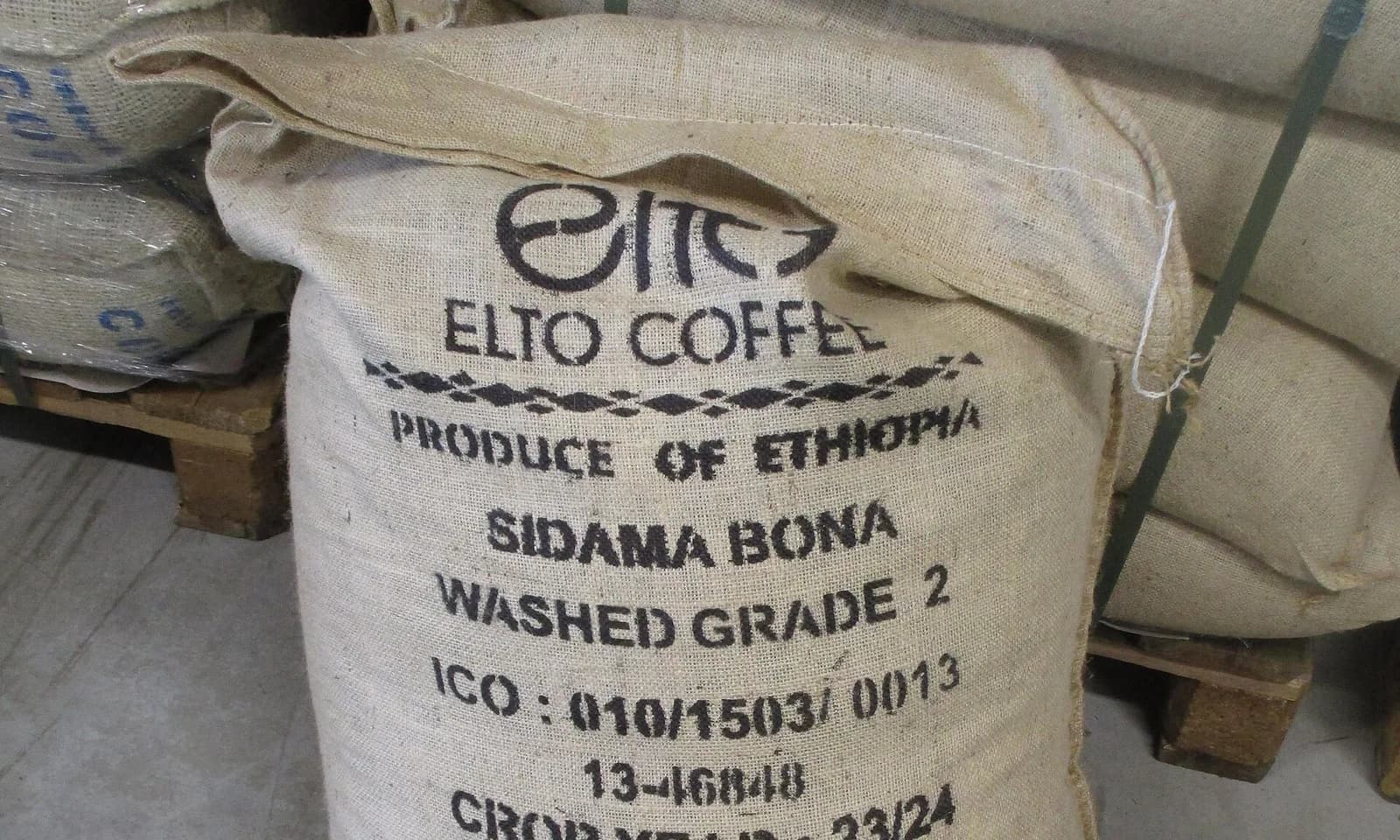
Green coffee bag markings should let a buyer connect every physical bag to one export parcel, one commercial lot, and one warehouse record. The ICO mark supplies the statutory parcel identity. Buyer-defined fields such as contract code, origin, process, grade, crop, bag sequence, and machine-readable ID make that identity usable. Approve the marking proof before packing, photograph it at origin, reconcile it against shipping documents, and quarantine material mismatches at receipt.
Green coffee bag markings are the physical identity layer of a shipment. A correct invoice cannot stop two similar Ethiopian lots from being stored under the wrong warehouse code if the sacks are ambiguous. A beautiful custom bag cannot cure an ICO number that conflicts with the Certificate of Origin. Buyers need both compliance and operational clarity.
Search results usually explain only the three number groups in an ICO mark. That answer is necessary but incomplete. The buyer's real questions begin after decoding: which extra fields belong on the sack, who approves them, what must match across documents, how much photographic evidence is useful, and which discrepancies justify quarantine?
This guide answers those questions without repeating bag construction, general traceability, or destination paperwork. Use the green coffee packaging guide for jute, liner, and bag-format decisions. Use the shipping documents checklist for the wider document pack.
An ICO identification mark names one export parcel through three numeric groups: producing-country code, exporter or grower code, and parcel serial number. For Ethiopia, the first group is 010. Read a mark such as 010/0123/0047 as Ethiopia, assigned exporter 0123, parcel 0047.
Rule 3 of the International Coffee Organization's Rules on Statistics requires a unique mark for each parcel. It specifies up to three digits for the country, up to four for the grower or exporter, and up to four for the parcel serial. The mark must appear on every bag or other package and on the related Certificate of Origin. The ICO annex lists Ethiopia as code 010 and uses an October-to-September coffee year for parcel sequencing.
| Element | Example | What it proves | What it does not prove |
|---|---|---|---|
| Country code | 010 | The producing member is Ethiopia | Region, washing station, or farm |
| Exporter code | 0123 | The nationally assigned grower or exporter identity | The buyer, cooperative, dry mill, or warehouse |
| Parcel serial | 0047 | The unique export parcel in the coffee year | Grade, process, crop, or individual bag number |
The ICO mark identifies the parcel for trade statistics and document control. It does not independently authenticate a claimed washing station, cup score, certification, process, or grade. Those attributes need separate records and buyer-defined markings. Treat the ICO number as the primary join key, not as the complete product story.
A useful specification separates the mandatory export identity from the operational fields a buyer needs. This two-layer model prevents marketing copy from crowding out the legal mark and prevents a legally valid sack from becoming an inventory problem.
The mandatory layer should remain visually stable and legible. The operational layer can change by contract and program. Our Addis Ababa team sees marking errors increase when packers must interpret long free-text instructions at the sewing line. A fixed field order with short controlled values is easier to check than a paragraph of custom wording.
| Field | Control status | Buyer purpose | Recommended format |
|---|---|---|---|
| ICO identification mark | Required export identity | Parcel-to-certificate match | 010/####/#### |
| Country of origin | Required by contract or market rules | Origin declaration and receiving check | PRODUCE OF ETHIOPIA |
| Net mass | Contract and shipping control | Count-to-weight reconciliation | 60 KG NET |
| Buyer contract and lot code | Buyer-defined | ERP, purchase order, and allocation match | PO-4821 / ETH-GUJI-26-01 |
| Origin, process, grade, crop | Buyer-defined | Prevents adjacent lots from being mixed | GUJI / NATURAL / G1 / 2025-26 |
| Bag sequence | Risk-based | Bag-level exceptions and audit trail | 001 OF 120 |
| Barcode or QR code | Optional operational layer | Fast warehouse scanning | Human-readable text plus encoded ID |
Machine-readable codes should supplement plain text, never replace it. A torn label, dead scanner, missing network connection, or system migration must not make the sack anonymous. Encode a stable ID that resolves to the lot record. Do not place confidential prices or personal farmer data in a publicly readable QR payload.
Bag-mark approval should happen in two gates. Approve the fixed artwork when the contract is confirmed, then approve the lot-specific variable data after the ICO mark and final packing details exist. One approval cannot safely cover both because the legal parcel number is often assigned later than the base bag design.
Approve buyer name, logo authorization, field labels, country wording, font size, contrast, mark position, ink color, and the reserved area for the ICO number and lot variables.
Approve the assigned ICO mark, contract code, lot name, process, grade, crop, net mass, sequence logic, and any barcode data against the frozen master-data sheet.
Put revision control on both proofs. The approval record should show file name, revision, approver, date, and which purchase contract it governs. Avoid approval by scattered chat messages. A single signed PDF or controlled ticket gives the pack team one version to follow and gives both parties evidence if an obsolete proof is used.
“Seller shall mark every bag legibly and indelibly with the approved ICO identification mark, country of origin, net mass, buyer contract code, lot code, origin, process, grade, crop, and bag sequence where specified. Seller shall submit fixed artwork and populated variable-data proofs for written approval before packing and shall provide representative marking photographs before shipment.”
The Green Coffee Association contract terms require country-of-origin branding for the U.S. trade and state that spot contracts must include identifying marks or lot numbers. A custom clause remains valuable because it defines the extra operational fields and the approval evidence the standard trade terms do not specify.
Marking control belongs at the point where an empty bag becomes a packed unit. The operator needs the approved proof and the current lot sheet. A second person should verify the first completed bag before the run continues, then audit the run at defined intervals and after every ink, stencil, label-roll, lot, or shift change.
Three origin conditions cause more trouble than the artwork itself. Jute absorbs ink unevenly, a folded sack hides digits, and dust reduces adhesive-label performance. We favor high-contrast marks placed on a flat visible panel, followed by a rub check and a photograph after the filled bag is sewn. A perfect proof on a screen is not evidence of a readable packed bag.
| Control point | Acceptance question | Record |
|---|---|---|
| Line clearance | Were old bags, labels, stencils, and lot sheets removed? | Signed clearance check |
| First completed bag | Do content, position, contrast, and code scan match the proof? | First-piece approval photo |
| In-process audit | Has legibility or variable data drifted during the run? | Time, bag sequence, result, initials |
| Run close | Do completed quantity and sequence agree with the packing count? | Reconciliation and exception log |
The marking check should share the same frozen lot identity used in the container loading control. Re-keying the ICO number or lot code into separate spreadsheets creates avoidable transcription risk. One controlled record should feed the bag proof, packing list, loading report, and shipping instruction.
Shipment identity is reliable when four records agree: physical bag, packing list, ICO Certificate of Origin, and transport document. Add the buyer's purchase order or ERP lot record as the commercial reference. The review should compare exact codes, not merely similar coffee descriptions.
| Data element | Bag | Packing list | Origin certificate | Transport record |
|---|---|---|---|---|
| ICO mark | Exact | Exact | Exact | Expected under ICO rules |
| Bag count and net mass | Counted units and stated mass | Exact totals | Shipment net mass | Shipping quantity or weight |
| Origin and coffee type | Visible text | Product description | Producing country and form | Cargo description |
| Buyer lot and contract | If specified | Required for allocation | Not normally required | Only if included in marks and numbers |
The ICO rules state that the identification mark should also appear on transport documents unless another arrangement applies. That makes the mark a practical bridge between the cargo and the document set. If multiple parcels share one container, preserve separate lines by mark and quantity. A container total alone cannot show which parcel is short, damaged, or misallocated.
A useful photo pack proves readability, consistency, and shipment context. One close-up can prove the ink but not the quantity or location. One wide container photo can prove loading but not the digits. Combine overview and detail images under a file-naming rule tied to the lot.
Photograph an error before overmarking, relabeling, or replacing the bag. The corrected image proves disposition; the original image explains why the correction record exists. At destination, repeat the same logic before bags are redistributed. The green coffee receiving inspection provides the wider dock-to-release sequence.
Not every marking error has the same consequence. Classify the discrepancy by whether it threatens statutory identity, lot identity, inventory usability, or appearance only. Keep affected bags identified and on hold until an authorized person records the disposition.
| Mismatch class | Example | Immediate action | Release condition |
|---|---|---|---|
| Critical identity | ICO mark differs from Certificate of Origin | Stop release and segregate affected parcel | Exporter and competent document parties resolve the identity |
| Major lot control | Guji natural bags carry the buyer code for a washed Sidama lot | Quarantine, count scope, sample if identity is uncertain | Evidence proves contents and records are corrected |
| Operational | Barcode fails but human-readable fields are correct | Create controlled warehouse labels | New label maps to the unchanged source identity |
| Cosmetic | Logo is slightly off-center with all fields readable | Record against the approved artwork tolerance | Commercial acceptance by the named buyer approver |
Never solve a mismatch by discarding the original identity. If an importer overbags a torn sack or applies a warehouse label, preserve the source ICO mark and lot code in the record. That continuity matters for stock control, recall readiness, and any later green coffee quality claim.
A practical recall system uses more than one identifier. Published wholesale green-coffee recall procedures map ICO marks to importer purchase references and warehouse cargo numbers. Each code answers a different question: what export parcel is this, which commercial purchase owns it, and where is it stored?
Consider a Canadian specialty roaster receiving three Ethiopian parcels for distinct products: a Guji natural seasonal release, a washed Yirgacheffe core coffee, and a Sidama component for espresso. The sacks use one approved brand layout, but each lot has a different ICO parcel number, buyer lot code, process, grade, and bag-sequence range.
The exporter freezes one master-data row per lot and produces three populated proofs. At packing, the first bag of each run receives second-person approval. Run photos capture the first, middle, and final sequences. The packing list keeps separate lines by ICO mark, buyer lot, count, and net mass. Loading photos show each group's position in the container.
At receipt, the roaster scans bag IDs into three quarantine locations. One Yirgacheffe sack has an unreadable barcode, but its ICO mark and printed lot fields match. The warehouse applies a controlled internal label without changing the source identity and releases it with the lot after normal inspection. If the ICO mark had named the Guji parcel instead, the bag would remain isolated pending content verification and exporter review.
The commercial gain is not a decorative sack. It is faster receiving, clean allocation, and narrow exception handling. One damaged code affects one documented bag instead of casting doubt over three saleable lots.
Green coffee bag markings work when every actor can reach the same conclusion from the sack and its records. Keep the ICO mark exact, separate legal identity from buyer data, approve variable fields before packing, capture evidence during the run, and reconcile bags against documents before shipment and release.
For Ethiopian lots, the first group 010 starts the chain. The exporter code and parcel serial continue it. Buyer contract, origin, process, grade, crop, and bag sequence make the chain usable inside a roasting business. That disciplined identity system turns a printed sack into reliable commercial evidence.
Request current offerings, samples, and a documented marking plan for the lots you select. Our Addis Ababa export team can align parcel identity, buyer fields, packaging, and shipment evidence before the first bag is filled.
The standard ICO identification mark has three parts: producing-country code, assigned exporter or grower code, and export-parcel serial number. On Ethiopian coffee, the first group is 010. Extra printed fields such as region, process, grade, crop, buyer lot, or bag number are operational descriptions, not parts of the ICO mark.
Ethiopia's ICO producing-country code is 010. The International Coffee Organization lists it in the country-code annex to its Rules on Statistics. A complete Ethiopian parcel mark adds the assigned exporter or grower code and the parcel serial, using the format 010/####/####. The country code alone does not identify a specific seller or shipment.
Every bag within one export parcel should carry that parcel's ICO identification mark, and the same mark should appear on its Certificate of Origin. A container may carry multiple parcels, but the packing list should preserve separate lines by mark, count, and weight so each physical group remains identifiable.
A QR code is useful when the buyer or warehouse has a maintained scanning system and a stable lot database. Keep the core identity in human-readable text as well. Encode a durable record key rather than sensitive data, and test the finished code on filled jute bags before approving the production run.
Place the affected bags or parcel on hold, preserve photographs and original markings, and identify the exact field and scope of the mismatch. An ICO-mark conflict needs formal exporter and document review. A correct human-readable identity with a failed barcode may be resolved through a controlled internal label and documented approval.
About This Insight: Published Aug 12, 2026 by Ethio Coffee Import and Export PLC, an origin-connected Ethiopian coffee exporter. Requirements and buyer specifications vary by contract and destination; confirm the rules that apply to the shipment before packing.