
Your cart is empty
Browse OfferingsLicensed & Affiliated


Ethio Coffee Import and Export PLC is a family-owned Ethiopian coffee exporter shipping green coffee beans to roasters, importers, and distributors worldwide.
© 2026 Ethio Coffee Import and Export PLC. All rights reserved.
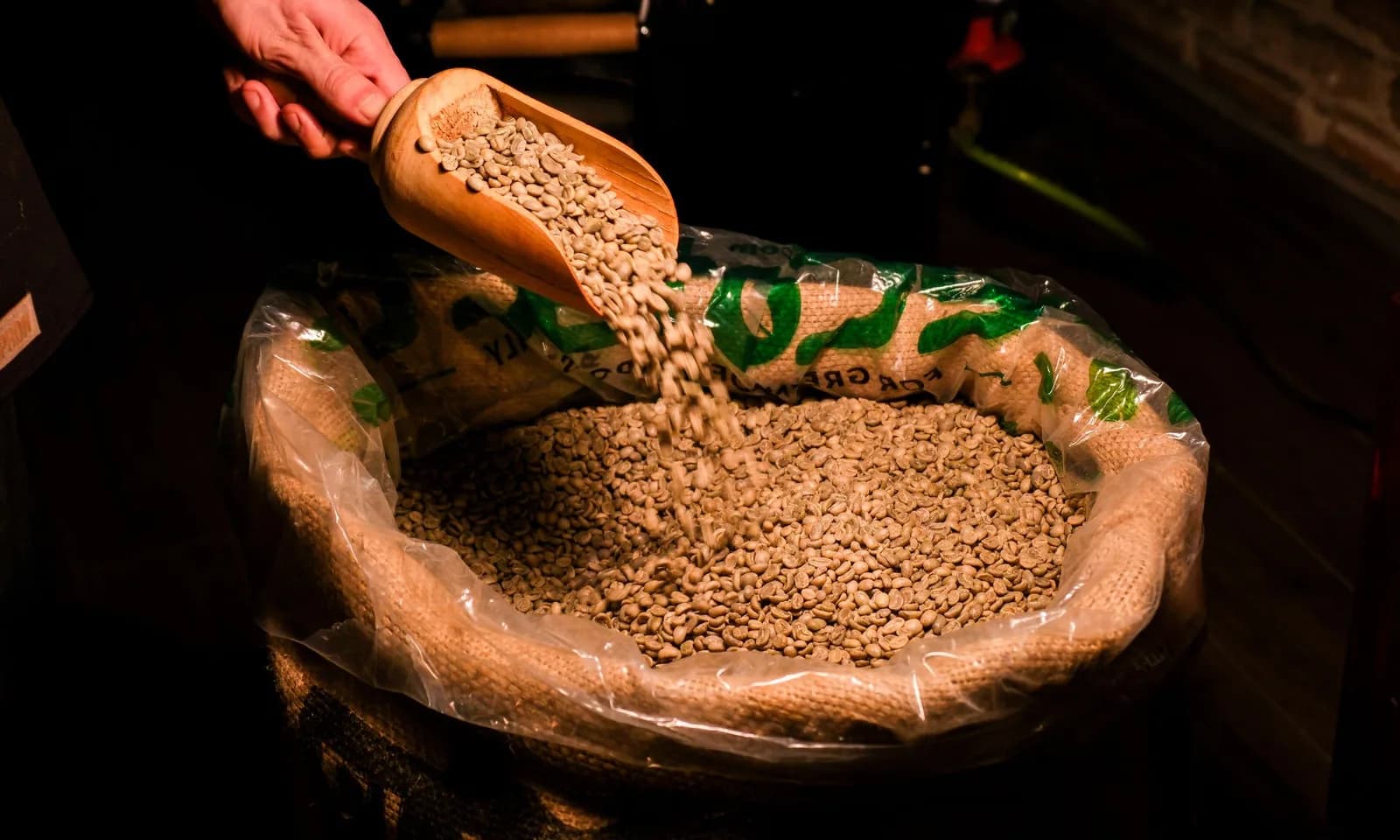
A green coffee certificate of analysis is useful only when the buyer can connect every reported result to the contracted lot, the represented sample, a stated method, and an authorized release decision. Review the document in six gates: identity, sample basis, issuer control, method clarity, specification status, and shipment reconciliation. Put the lot on hold when any gate fails. A polished PDF cannot repair missing traceability.
A green coffee certificate of analysis can look complete while leaving the purchase decision unsupported. A page may show moisture, defects, screen distribution, and cup score yet omit the sample code, test method, represented quantity, or authorized signatory. Those omissions matter because the buyer is not purchasing a page of results. The buyer is purchasing a defined lot that must satisfy agreed requirements.
This checklist is for green-coffee importers, roaster procurement teams, quality managers, and food-safety staff reviewing an offer, pre-shipment sample, or final release pack. It focuses on whether the evidence is valid for the decision in front of you. For the underlying limits, use a controlled green coffee specification sheet. For the mechanics of drawing representative increments, use the separate green coffee sampling protocol.
A CoA is a controlled report of observations or test results for an identified sample. Its practical job is to answer four questions: what was tested, how it was tested, what the laboratory found, and who authorized the report. When the sample is traceably linked to the contracted coffee, the CoA becomes part of a lot-release record.
It does not create the buyer's requirements, guarantee that every bag is identical, replace an approved pre-shipment sample, or prove conditions after the test date. It also does not turn an exporter's in-house laboratory into an accredited third-party laboratory. The report's value depends on the decision, the contract, and the evidence level the buyer requested.
| CoA field group | Question it must answer | Buyer action if unclear |
|---|---|---|
| Lot identity | Which commercial coffee does this report cover? | Hold and request a corrected lot reference |
| Sample basis | When, where, and from what quantity was it drawn? | Ask for sample record and represented volume |
| Issuer control | Who tested, reviewed, revised, and released the report? | Authenticate with the named organization |
| Methods and results | Are the values reproducible and interpretable? | Request method, unit, basis, and reporting limit |
| Disposition | Did the result pass, require review, or fail? | Apply the contract rule before release |
The highest-risk field is often not the result
A plausible moisture value attached to the wrong stock sample is weaker evidence than an unusual value attached to a fully traceable final sample. Validate identity and sample basis before debating whether a number looks reasonable.
Start at the top of the certificate and ignore the results column. The report should identify the seller or exporter, buyer or contract reference where applicable, origin, crop period, process, grade or quality description, seller's lot code, and the report's own unique number. For shipment-stage evidence, add purchase order, bag marks, container or booking reference when available, and represented bag count or net weight.
Match those fields against the approved offer and contract. A regional name such as Guji, Sidama, or Yirgacheffe is a sourcing description, not a unique lot key. The same commercial description can appear on separate mill runs, warehouse stacks, or shipment parcels. At least one identifier must follow the physical coffee through sampling, testing, bagging, and release.
The certificate should name the sample code, sample type, sampling date, receipt date, test date, sampling location, sampler or responsible party, represented quantity, and condition at receipt. The sample stage is decisive. An offer sample can support buying interest, while a pre-shipment sample can support release only after final preparation and with a traceable relationship to the tendered lot.
For bagged green coffee, ISO 4072 covers administrative arrangements, taking increments, preparing samples, and marking them for contract-conformity examination. The CoA does not need to reproduce the entire sampling procedure. It should cite the agreed protocol or sampling record clearly enough for another reviewer to retrieve it.
Evidence that strengthens the sample link
Evidence that weakens the sample link
Identify who generated the results and why that evidence level fits the purchase. Exporter laboratories are useful for routine physical and sensory release checks when their methods, equipment, analysts, and review controls are transparent. Buyer laboratories provide independent verification. Accredited third-party laboratories may be required for regulated residues, contaminants, contractual disputes, or buyer policies.
Accreditation is not a logo check. Confirm the laboratory name, accreditation body, certificate status, and whether the requested method sits inside the laboratory's accredited scope. ISO/IEC 17025 is the international competence framework for testing and calibration laboratories, but a laboratory can be accredited for some methods and not others.
Then review document control: unique certificate number, issue date, page count, revision number, reason for amendment, analyst or reviewer, authorized signatory, and contact details that can be verified independently. A revised certificate should not silently overwrite the original. Keep both versions and the change reason in the purchase file.
Read each line as a four-part record: parameter, method, result with unit, and decision limit. Moisture without a method or reporting basis is incomplete. Screen distribution without the sample mass and screen convention can be misread. A sensory score without protocol, sample roast reference, panel information, or disqualifying taints may not support the product role.
The same discipline applies to pesticide residues, mycotoxins, and other food-safety tests. Record the method version, analyte, result unit, limit of detection or quantification where relevant, and any measurement uncertainty needed for the decision rule. Use the destination requirement and contract to decide which panels are necessary. A generic statement that a lot is safe does not replace named analytes and reportable results.
| Parameter | Minimum context on the CoA | Frequent ambiguity |
|---|---|---|
| Moisture | Method, percentage basis, instrument, test date | Value copied without method or calibration context |
| Water activity | Method or instrument, sample temperature, result | Confused with moisture percentage |
| Defects | Grading system, sample mass, full and equivalent counts | Total shown without defect classes or basis |
| Screen distribution | Screen set, retained percentages, sample mass | One headline screen number hides the distribution |
| Sensory | Protocol, roast code, cup date, profile, taints, panel | Score treated as the entire acceptance rule |
| Residue or contaminant | Analyte, method, unit, result, reporting limit | Pass statement without result or analyte list |
Do not use a universal list of acceptable values. The contract and destination rules control the decision, and the right method depends on the parameter. If you need the technical interpretation behind a result, open the linked topic guide rather than expanding the CoA into a laboratory manual. For regulated chemical evidence, see the green coffee pesticide residue testing guide.
The certificate reports evidence. The buyer's approved specification supplies the limits and action rules. Bring both into one review view with columns for parameter, requirement, result, status, reviewer, and action. This prevents procurement from interpreting a laboratory number differently from quality staff.
Require a named person to authorize the disposition and record the date. If retesting is permitted, define who selects the retained sample, which laboratory and method apply, and how conflicting results will be handled. Do this before shipment. The JDE Peet's green coffee sourcing terms published November 1, 2025, for example, make sample identification and represented volume explicit fields and reserve analytical testing within the buyer's quality procedures. Your exact rules may differ, but the evidence-to-decision link should be equally clear.
Before authorizing shipment or payment, reconcile the certificate against the approved sample record, contract specification, packing data, and final lot identifiers. The CoA belongs inside the quality file. It is not a certificate of origin, phytosanitary certificate, fumigation certificate, or customs document, and it does not replace any of them.
Check that bag marks and lot codes have not changed after testing, the tested quantity matches the prepared quantity, the certificate date follows final preparation, and any amendment is approved. Then place the CoA in the broader green coffee shipping documents review so commercial and logistics teams use the same master data.
CoA confidence ladder
Higher is not automatically necessary for every parameter. Assign the evidence level by hazard, buyer policy, regulation, contract value, and consequence of error.
In Ethiopian export work, buyers may receive an exporter's physical and sensory report alongside official quality or grade paperwork. Keep each document's issuer and purpose visible. Do not rename the whole pack as one generic quality certificate, and do not assume an official grade document answers every buyer-specific specification field.
Three origin-side observations improve CoA review. First, a recognized origin and grade can describe more than one warehouse stack or final mill run, so preserve the exporter's unique lot code. Second, color sorting, density separation, hand sorting, or blending can materially change the prepared lot after an early sample. Release evidence should therefore refer to the final export-prepared coffee. Third, the contract, sample label, report, and bag marks often pass through different teams. Repeating one master identity block across all four reduces transcription drift.
As an origin-connected exporter, Ethio Coffee Import and Export works through trusted cooperatives, washing stations, and farming communities. We do not own farms or plantations. Our role is to connect buyer requirements to traceable supplier lots, coordinate sample and document control, and make clear which results come from exporter QC, official processes, or independent laboratory work.
Consider an illustrative mid-sized European roaster buying two containers of washed Ethiopian coffee. Procurement receives a clean one-page report showing 10.8% moisture and an 85.5 sensory score. The regional description and grade match the offer, but the report has no sample ID, represented quantity, method references, revision number, or final-mill date.
The quality manager does not reject the coffee and does not release it. The manager places a document hold and asks five questions: Which lot code was tested? Was the sample drawn before or after final sorting? What quantity did it represent? Which methods produced the physical results? Who reviewed and authorized the report?
The exporter confirms that the page came from an earlier stock-lot evaluation. After final preparation, the exporter draws and records a new pre-shipment sample, repeats the agreed checks, and issues a controlled report tied to the contract, final lot code, represented bags, and retained sample. The buyer then maps the results to the specification and releases the lot.
The lesson is not that the first numbers were false. They were valid for a different decision stage. The six-gate review prevented a stock-lot report from being treated as proof of final shipment conformity.
Mark each field pass, review, fail, or not applicable. Do not release the lot while a critical identity, sample, method, or food-safety field remains unresolved.
Identity and sample
Report and decision control
A reliable green coffee certificate of analysis is not defined by how many parameters fit on one page. It is defined by whether a buyer can trace the results to the contracted lot, understand the methods, apply the agreed limits, and recover the decision record later. Validate identity first, then sample basis, issuer, methods, status, and the final release file. That sequence turns laboratory data into usable procurement evidence.
Share your target origin, cup profile, physical specification, required tests, volume, and shipment window. We can present current Ethiopian lots, coordinate samples, and prepare a clear quality-document package for your approval process.
It should include the exporter or seller, unique lot and sample IDs, represented quantity, sampling and test dates, laboratory, methods, results with units, specification limits, disposition, certificate number, revision status, analyst or reviewer, and authorized signatory. Add contract, purchase-order, bag, or container references when they are available at that decision stage.
Yes, an exporter can issue a CoA for routine physical and sensory checks when the buyer accepts in-house evidence and the report identifies methods, equipment, sample, lot, analyst, and review control. Regulated contaminants, buyer policies, or contracts may require an independent or accredited laboratory, so define the evidence level before testing.
No. The pre-shipment sample lets the buyer inspect and cup a physical reference, while the CoA records results for an identified sample. They support the same release file only when both carry matching lot and sample references. A certificate cannot prove that an unlinked sample represents the coffee prepared for shipment.
The relevant question is whether testing occurred after the last operation that could change the lot and close enough to release to represent current condition. Final sorting, blending, rebagging, storage, or moisture exposure can make an earlier report unsuitable. Set timing in the specification and require a new report when identity or condition changes.
Treat it as invalid for release when the lot or sample cannot be identified, required methods or units are missing, the issuer cannot be authenticated, the report predates final preparation without a justified link, a revision is uncontrolled, required accredited scope is absent, or results do not map to the agreed specification and decision rule.
Specifications and Samples
Physical Quality
Food-Safety Evidence
About This Insight: Published on Aug 29, 2026 by Ethio Coffee Import and Export PLC, an origin-connected Ethiopian coffee exporter. Test methods, evidence levels, limits, and release rules must be agreed for each contract and destination. Contact us for current lot information and sample support.