
Your cart is empty
Browse OfferingsLicensed & Affiliated


Ethio Coffee Import and Export PLC is a family-owned Ethiopian coffee exporter shipping green coffee beans to roasters, importers, and distributors worldwide.
© 2026 Ethio Coffee Import and Export PLC. All rights reserved.
Pull contracted bags in stages and give your roastery a dependable receipt date.
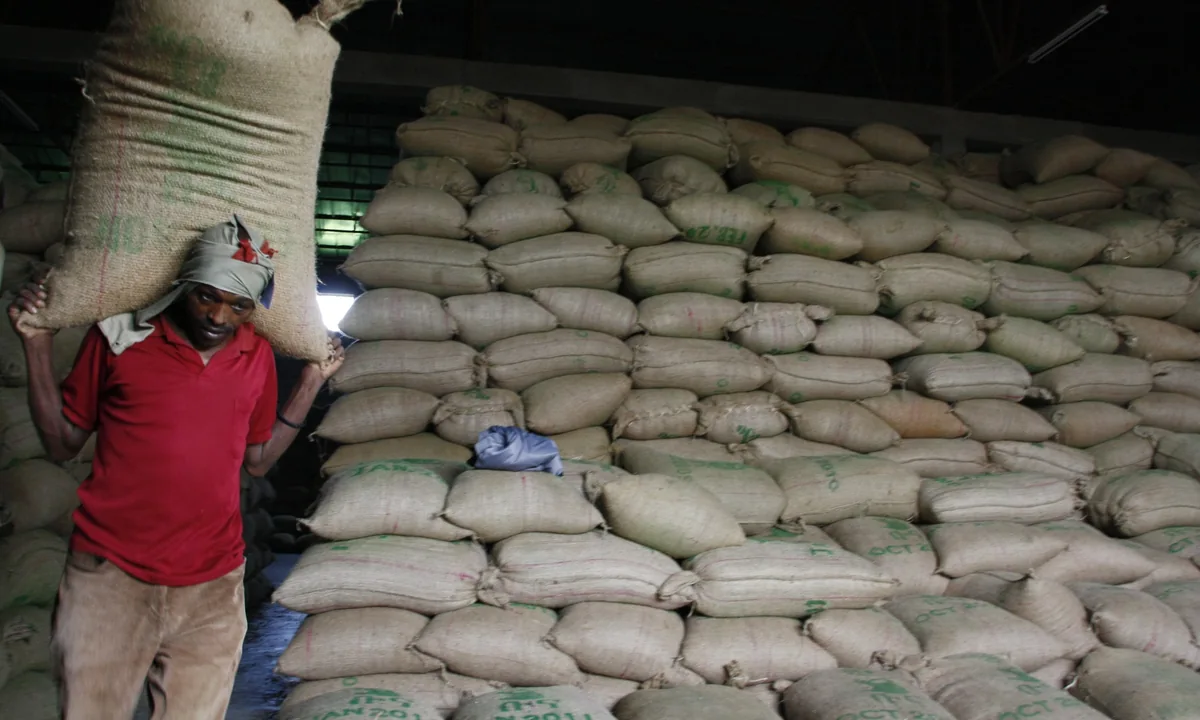
Green coffee warehouse releases determine when the bags you booked can reach the roastery. If the delivery order names the wrong warehouse lot or the truck misses the collection window, a fully covered coffee contract can still leave Friday's roast short. Give every withdrawal a bag count, a pickup deadline, and a record of what actually moved.
Agree the withdrawal window, release conditions, and fees when booking coffee. Work back from the roastery's usable-by date, request the exact warehouse lot and number of bags, and confirm staging before sending a truck. Close the withdrawal against the actual dispatch and receipt, then check the remaining contract balance and its deadline.
A green coffee warehouse release is an authorized withdrawal of specified bags from storage for pickup or shipment. Before booking a lot, ask the seller to confirm the storage location, when withdrawals may start and end, and who can authorize them. Tell the seller your expected withdrawal cadence so they can quote for the way you will take delivery.
Ask for the smallest permitted release quantity and the unit used for settlement. A contract may state total weight while the warehouse picks in whole bags. Record the nominal bag weight, the bag count available, and how actual or final weights are handled under your terms. If the final balance sits below the minimum, agree how it will be collected.
Confirm what starts the withdrawal period, such as a stated date or a warehouse availability notice. Ask which event meets the deadline: placing the request, issuing the order, or physically collecting the bags. Get the cutoff with its time zone and confirm who approves an extension. Put any notice period and payment or credit clearance requirement in the same record.
Ask how the seller charges for carry, handling, palletization, and freight. Identify the billing unit, rounding rule, and any minimum charge per pull. Ally Coffee's buyer FAQ describes partial releases, release-level invoicing, and carry charges after its agreed delivery period. Use your own contract to establish when each charge begins and who pays it.
Link the Ethiopian export lot, the confirmed bag mark, and the destination warehouse lot to one purchase line. Record the count at each location and the sample identifier associated with the coffee you approved. The warehouse should be able to pick the right bags using its own reference and confirm that reference against the release request.
For a Guji program, ask the exporter for the final dry-mill allocation and packing lines before creating the destination record. Keep one release line per warehouse lot even when the offer uses a single trade name. If a station's coffee appears on two distinct packing lines, retain both identities until the seller and warehouse confirm how they were entered at destination.
Keep the original bag marks and any warehouse relabeling reference together. If coffee moves between buildings or gets a new warehouse code after rebagging, request the dated cross-reference and bag counts before anyone works from the new ID. Use the green coffee bag-marking record to carry the origin references into that handoff.
Start with the date and time the roastery needs cleared coffee available. Reserve intake and quality review, reserve transit, then find the latest feasible warehouse pickup slot. Set the request deadline early enough for seller approval, warehouse staging, and carrier booking.
Put the dates on the actual calendar for both locations, including weekends, closure days, dock hours, and time zones. Record a date and an owner for each handoff. A pickup appointment confirmed by the carrier still needs a staging confirmation from the warehouse, especially if the order was amended or the depot changed.
Set the bag count using the kilograms needed through the next dependable delivery date, the usable stock at the roastery, and any already confirmed receipts due early enough. Convert the uncovered kilograms to whole bags, rounding up when full bags are required and checking space for the rounded quantity. Track upcoming pulls in the roastery replenishment plan under their expected dates so one shipment covers demand only once.
A delivery order, often shortened to DO, instructs the warehouse to prepare identified coffee for handover. A roaster can send the request, then the authorized seller or operator issues the instruction under the agreed terms. Covoya's wholesale ordering instructions describe its use for both pickup and shipping.
Send one request that gives the seller enough information to issue the DO and gives the warehouse enough information to stage the pull. Use these fields in a request form, order portal, or shared spreadsheet.
Ask the seller to confirm commercial clearance and the warehouse to confirm that the approved bags are staged. For a change after issue, request a revised DO or a cancellation through the issuer. Make sure the warehouse and carrier acknowledge the current instruction before loading. Keep the earlier version in the file with its cancellation status.
If collection slips past the pickup window, ask whether the warehouse will keep the bags staged and whether the DO stays valid. Confirm the new slot with the operator, then update the carrier and the roastery together. Put the next action and its owner on the same release record so both teams work from the revised date.
Match the DO to the warehouse's actual dispatch evidence and then to the receiving count. Track the bags requested, authorized, loaded, received, and accepted by the roastery as dated quantities on the same line. Reduce your open warehouse balance using the confirmed warehouse movement and investigate any quantity that fails to arrive.
Before pickup, a staged quantity can be reserved without being deducted from total physical warehouse stock. After pickup, mark the dispatched bags in transit and remove them from the warehouse balance. When the roastery receives the bags, clear the in-transit entry against the actual count and move accepted bags to available stock after the required checks. This keeps stock from disappearing at staging or appearing twice after delivery.
If the DO authorizes ten bags and the warehouse loads nine, log a one-bag short pick and confirm whether the remainder is still reserved or available for a future pull. If ten leave the warehouse and nine arrive, open a transit discrepancy against the dispatch documents and keep the warehouse debit at ten pending investigation. If the correct bag count arrives under a different lot code, hold the affected bags under your green coffee receiving procedure and ask the parties to reconcile the identifiers before use.
In this fictional Ethio Coffee example, a wholesale roaster contracts 40 bags of washed Guji at a nominal 60 kg per bag and needs 720 kg of usable green coffee by Friday, December 11, 2026. The roastery already has 180 kg cleared for that program, leaving 540 kg to cover. The net requirement is nine bags, and the buyer requests a tenth as contingency under its own plan.
The parties assume a two-business-day staging allowance after request approval and a one-business-day transit time. The buyer gets the request accepted on Monday, December 7, confirms pickup on Wednesday, and reserves receiving and quality review on Thursday. The carrier will receive the current DO and the pickup contact before dispatch.
| Record | Bags | Action |
|---|---|---|
| Contracted at the warehouse | 40 | Start the position ledger |
| Authorized on the DO | 10 | Reserve against the warehouse lot |
| Dispatched and accepted | 9 | Post 540 kg using nominal weights in this example |
| Open at the warehouse | 31 | Keep the undrawn bag on the ledger after confirming its status |
The nine accepted bags put the roastery at exactly 720 kg with no contingency remaining. The buyer confirms the warehouse released its reservation on the tenth bag, reconciles release-level charges against the nine-bag dispatch under the example terms, and brings forward the next review. If the buyer had closed ten bags from the signed DO alone, the warehouse balance would have been understated by one bag and the roastery's coverage overstated by 60 kg.
Schedule a balance review while there is still time to stage and collect the final bags. Confirm the warehouse balance by lot and location, check for open delivery orders, and confirm how any hold affects the deadline. Book the final pull or record the seller's written acceptance of a revised date.
Where carry is charged by weight and period, calculate the billable weight multiplied by the agreed rate and billable periods. Verify the minimum, rounding, billing date, and whether a partial period is charged in full. Review these costs alongside the available receiving slots before agreeing to defer a release.
Record the handover timestamps for request approval, staging confirmation, dispatch, and receipt. A missed cutoff calls for a different scheduling change than a missed freight appointment. Use the actual time spent at each step to set the next withdrawal's request date and to identify which partner needs earlier notice.
Green coffee warehouse releases give the roastery a reliable supply date when the contract balance, pick instruction, and received quantity tell the same story. Close the purchase line after checking the last dispatch, any remaining charges, and any open discrepancy. Keep the final ledger with the original Ethiopian lot and sample references so the next buy starts with a usable record.
Share your preferred lot, required green kilograms, and first usable-by date. Ethio Coffee can discuss current offerings, lot-specific samples, and the handoff your receiving partner needs.
Yes, when the seller agrees to partial withdrawals. Confirm the minimum quantity, approved warehouse location, cutoff, and deadline for the final pull. After each pickup, match the actual dispatched bags to the contract line and carry forward the confirmed remainder. Ask how the seller invoices each pull.
The party authorized to release the stock issues the delivery order, typically the seller or its designated operator. The buyer supplies the requested lot, quantity, pickup or delivery details, and collector information. Ask for the issued order number and staging acknowledgment before sending the carrier to collect the bags.
The agreed terms set the start date and the quantity subject to carry charges. Ask the seller which event ends included storage, how a partial billing period is treated, and which units appear on the invoice. Keep an extension and any revised rates in the contract record.
Record the bags the warehouse confirms it loaded and ask whether the unpicked balance remains reserved. Update receipt expectations and reconcile the invoice under the agreed terms. A bag shown as loaded but absent at delivery should be investigated against the carrier and receiving evidence as a separate discrepancy.
About This Insight: Written by Ethio Coffee Import and Export PLC, an origin-connected Ethiopian coffee exporter. Published Nov 14, 2026. The Guji example uses fictional dates, quantities, and terms.