
Your cart is empty
Browse OfferingsLicensed & Affiliated


Ethio Coffee Import and Export PLC is a family-owned Ethiopian coffee exporter shipping green coffee beans to roasters, importers, and distributors worldwide.
© 2026 Ethio Coffee Import and Export PLC. All rights reserved.
Turn accepted orders into a roast schedule that fits your machines, packing team, and approved Ethiopian lot availability.
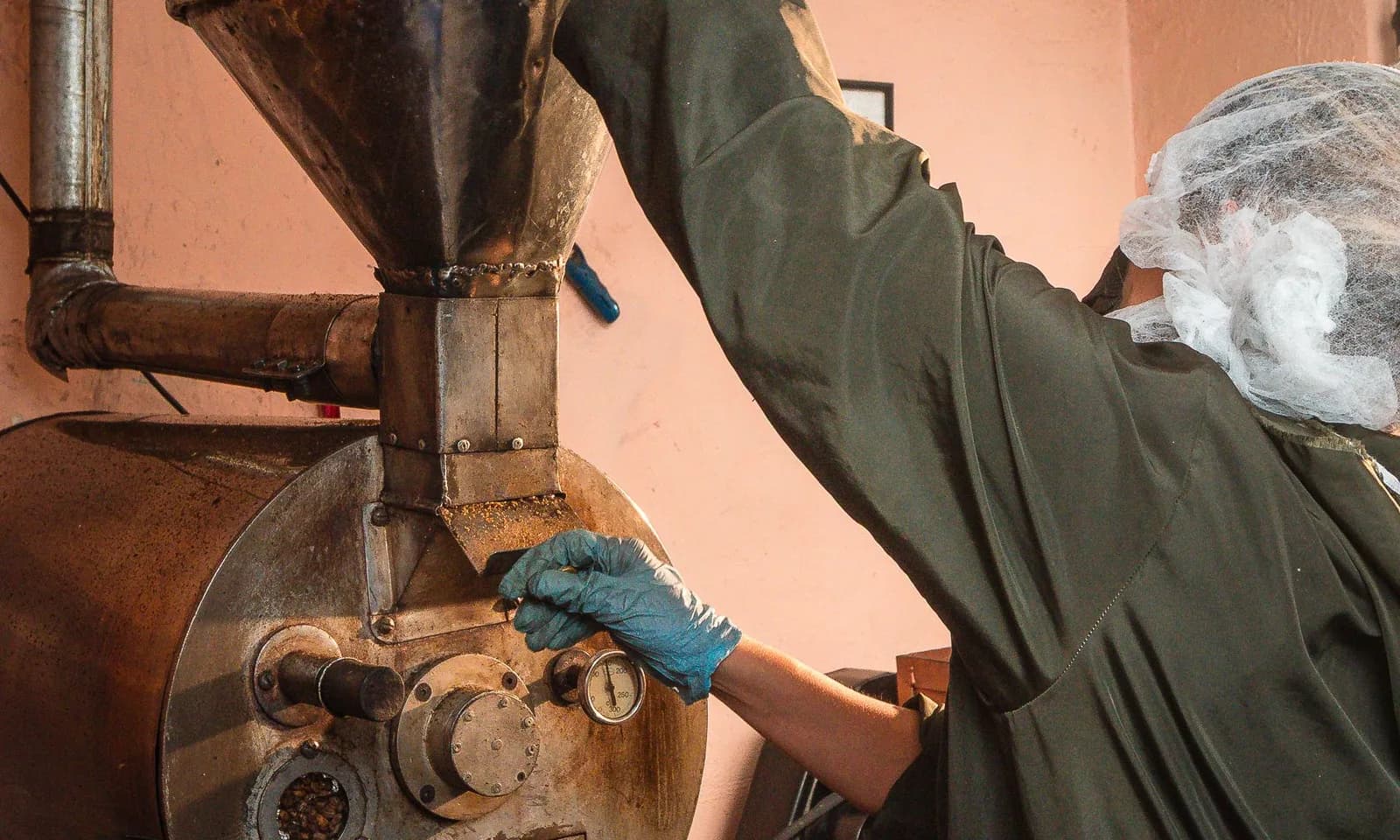
Coffee roasting production planning fails when a team accepts a wholesale order because the roaster has space, then discovers that packing cannot finish before collection. A feasible promise needs enough approved coffee, suitable batch slots, available people, and a packing window. A list of kilograms to roast answers only part of that problem.
Build the schedule from accepted orders after crediting stock that can actually serve them. Convert the remaining requirement into approved batches, then reserve machine, packing, and staff time against real deadlines. Publish one version with named lots and owners. Accept a late change only after checking every affected resource and the customer's service window.
Define which orders the production team must fulfill before calculating any batches. Give each order line a product version, pack size, quantity, dispatch deadline, and acceptance status. Freeze that list at an agreed cutoff so operators begin with a stable instruction.
Separate standing orders from unconfirmed forecasts. A recurring café order that has already generated a dated order line must not also appear as additional forecast demand. Keep requested increases visible, but require a capacity decision before adding them to the committed plan.
RoasterTools' production-day documentation, updated in March 2026, separates order approval, inventory counting, production tasks, fulfillment, and shipping. That sequence supplies a useful distinction: coffee produced, coffee assigned to an order, and coffee dispatched are separate events.
Record the order's last acceptable completion time, including carrier collection or local delivery loading. Work backward through packing, quality release, and any approved holding interval to identify the roast slot. Use the established coffee degassing and wholesale dispatch plan for service-age constraints rather than assuming everything roasted today can ship today.
Subtract only identified stock that is released, unallocated, and suitable for the customer's specification and use date. Keep packaged units, loose roasted coffee, and green coffee in separate planning fields. Each state removes work from a different part of the schedule.
Released packaged stock can remove roasting and packing demand. Suitable loose coffee can remove roasting demand but still needs packing. Green coffee removes neither task; it permits a future roast only when the lot and production instruction are approved. Trace the same kilograms through these states so they never cover two orders simultaneously.
Group products for roasting only when they share the approved lot or recipe, profile, machine conditions, and relevant specification. Two pack sizes may draw from one compatible bulk roast. Two products sharing an Ethiopian origin name may still require different production runs. Keep pack-format demand separate even when roasting demand is combined.
Use the measured saleable-yield method to calculate expected packed output per approved batch. Include planned withdrawals in that input once. Track any rounded-up surplus as identified stock with a permitted next use; a positive remainder is not automatically future sales.
A finite schedule assigns every task to a resource that is actually available for its full duration. Measure repeatable operating cycles on your equipment, then add startup, changeovers, breaks, maintenance, and closing work. Check downstream completion as well as total roast output.
Reserve the machine time needed to run the approved batch and make the next scheduled charge possible. State whether cooling and recovery overlap with roasting on that equipment. If the measured interval excludes the final cooling or discharge task, reserve that final task separately.
Observe normal consecutive production, including handling and thermal recovery, before setting the planning interval. A demonstration roast or the machine's nominal kilogram rating cannot establish a shift's dependable output. Preserve the validated batch size; reducing the final charge to eliminate surplus requires an approved profile for that charge.
Translate packed kilograms into units for each format, then apply the observed line rate and setup time. Check bags, labels, cartons, and required staff before reserving the slot. A small-bag order can consume substantial packing time even when its coffee weight looks modest.
Create a separate staff calendar when people move between weighing, roasting, grinding, packing, and dispatch. Two machines free at the same time do not create two available operators. Overlap work only when the staffing and approved operating procedure support it, and preserve required equipment supervision.
Check roast batches and packing units independently before accepting the complete order. This fictional Ethio Coffee exercise, prepared in October 2026, shows how a feasible roast day can still produce an infeasible dispatch plan. All quantities, yields, rates, and durations below are scenario assumptions rather than industry benchmarks.
A wholesale roaster supplies two approved single-origin Ethiopian products: an espresso in 1 kg bags and a filter roast in 250 g bags. Accepted demand is 84 espresso bags and 168 filter bags. Suitable released packaged stock covers 12 espresso bags and 24 filter bags. Both green lots are available and released.
| Product and remaining packs | New packed need | Expected output per 12 kg green batch | Full batches |
|---|---|---|---|
| Espresso: 84 − 12 = 72 bags | 72 kg | 12 × 0.84 = 10.08 kg | 8, rounded up |
| Filter: 168 − 24 = 144 bags | 36 kg | 12 × 0.86 = 10.32 kg | 4, rounded up |
The plan reserves 144 kg green across twelve batches. Expected saleable output is 80.64 kg espresso and 41.28 kg filter, leaving 8.64 kg and 5.28 kg beyond the new order requirement. Allocate that 13.92 kg equivalent surplus to identified bulk storage if permitted, with its packing allowance reserved for later use; the current packing plan covers only the ordered units.
The six-hour roast window provides 360 minutes. Assume conservative sequential machine reservations of 18 minutes per espresso batch and 16 per filter batch, including discharge, cooling, and readiness for the next charge. Reserve 35 minutes for startup, 12 for the product change, 25 for closing, and 20 as contingency.
8 × 18 + 4 × 16 + 35 + 12 + 25 + 20 = 300 minutes
The roast plan fits, with 60 unassigned machine minutes. An approved sequence and available roast operator are assumed. Expected output remains subject to actual weighing and release.
Now check the later packing slot, after the required product holds and quality approvals. It has 140 staffed minutes available before collection. For this simplified mixed-format example, the measured rate is two bags per minute for either format, including routine in-run checks. Two setups take 12 minutes each, and closing takes 18 minutes.
(72 + 144) ÷ 2 + 2 × 12 + 18 = 150 minutes
Packing is ten minutes over its available window. The 60 spare roast minutes occur on another resource and do not solve this shortfall.
Reserve an additional staffed packing slot, move suitable packing work earlier within the approved process, or agree a revised collection before confirming the promise. Recheck staged coffee availability and the rest of that day's tasks. Removing tests, raising an unmeasured line rate, or counting unapproved overtime would only hide the conflict.
This is the commercial insight: weight alone understates the work created by a product mix. The filter order needs half the new coffee mass of espresso but twice as many new packs. Price and accept the service commitment with that handling demand visible, rather than treating every roasted kilogram as equal production effort.
Release one dated schedule with a version number, task owners, approved inputs, and completion deadlines. Keep tentative work separate from authorized production. Operators need a clear way to record what actually happened without silently changing the plan everyone else is using.
Cropster's March 2026 roast scheduling instructions distinguish draft, published, synced, roasted, and inconsistent batches. Its calculation also makes full-batch rounding explicit. A spreadsheet can preserve the same planning discipline without reproducing the software interface.
Keep physical labels consistent with the schedule. A tote marked only with a product name makes two roast dates difficult to allocate correctly. Use the roastery batch traceability system to carry lot identity through each transformation and customer allocation.
Route every post-cutoff request through the planner before adding production work. Check eligible stock, the next feasible batch, downstream capacity, material availability, and customer timing. Record which existing commitment changes if the request displaces work.
In the example, an extra espresso order might fit within the rounded batch surplus without another roast. It still needs unallocated conforming coffee, compatible age, additional bags, and a packing reservation. A spare kilogram and a spare finished bag are different promises.
After an order cancellation, remove or reassign the related unstarted work deliberately. Work already roasted needs an identified stock disposition. Avoid subtracting the canceled order while leaving its planned tasks active, which creates unapproved surplus and an inaccurate capacity picture.
When a batch is held, remove its expected output from available coverage immediately and identify the affected orders. Use approved stock, reserve a replacement run, or agree a delivery change. Leave the hold decision intact while the team finds capacity; urgency does not qualify a failed batch.
Treat an Ethiopian lot as schedulable only when its identity, required preparation, physical availability, and buyer approval support the intended task. Keep expected arrivals visible as conditional supply. A supplier milestone helps planning only when the team knows what must happen next.
Cropster's harvest calendar guidance, updated in October 2026, explicitly separates exporting months from roastery arrival dates and describes typical periods as approximate. Translate that distinction into three questions for an Ethiopian sourcing discussion:
These are recommended origin-to-roastery handoffs, not reports of visits or a claim that every exporter keeps identical records. Use the approved lot-changeover process when a replacement affects an established recipe. Keep the qualification work visible in the calendar rather than hiding it inside ordinary customer production.
Compare planned and actual completion by stage, then record the cause of each missed commitment. Separate order changes, missing inputs, equipment delay, staff conflict, quality holds, and packing overrun. Different causes need different corrections.
Review repeat timing errors before changing the standard. If packing repeatedly takes longer for one format, investigate the method and revise its observed rate. If one supplier milestone repeatedly slips, adjust conditional availability. An added buffer everywhere consumes capacity without explaining the failure.
Coffee roasting production planning works when every accepted order has an executable path through the roastery. Count usable stock once, reserve the full work, make surplus visible, and authorize changes against the complete promise. That discipline connects an identified Ethiopian lot to a delivery the wholesale team can fulfill.
Share your product application, required volume, qualification deadline, and first production date with Ethio Coffee. Discuss identified lot samples and availability milestones before committing the coffee to your wholesale schedule.
Start with accepted order lines, suitable released stock, approved lots and profiles, validated batch output, and dispatch deadlines. Add machine intervals, packing rates, materials, staff availability, and quality release timing. The schedule is feasible only when the remaining work fits every required resource before its agreed completion time.
Subtract startup, changeovers, breaks, maintenance, closing work, and contingency from available machine time. Fit the approved batch intervals into the remainder, checking any separate cooling or discharge requirements. Confirm operator availability and downstream completion. Dividing shift hours by roast duration alone usually leaves essential tasks outside the calculation.
Yes, when the coffee, approved production specification, and customer requirements are compatible. Aggregate the roast requirement while preserving each pack format as a separate downstream task. Record how much bulk coffee each task consumes, reserve the relevant materials and setup time, and retain batch identity in the finished packs.
Packing has its own unit counts, setup work, staffing, material checks, and completion deadline. A small-bag order can require many more handling cycles than its coffee weight suggests. Spare roast time does not create packing capacity. Reserve the downstream slot before confirming that the complete order can leave on time.
No. First check whether suitable unallocated stock can cover the request, including any identified surplus from rounded batches. Then check packing, materials, staffing, quality status, and the customer's service date. Add a roast only when the complete revised plan fits, or agree a different quantity or delivery commitment.
About This Insight: Written by Ethio Coffee Import and Export PLC, an origin-connected Ethiopian coffee exporter. Published Oct 31, 2026. The worked schedule is fictional; adapt planning assumptions to validated equipment performance, product requirements, and customer commitments.