
Your cart is empty
Browse OfferingsLicensed & Affiliated


Ethio Coffee Import and Export PLC is a family-owned Ethiopian coffee exporter shipping green coffee beans to roasters, importers, and distributors worldwide.
© 2026 Ethio Coffee Import and Export PLC. All rights reserved.
Turn roast age into a tested service window for Ethiopian coffee and a delivery promise your café customers can use.
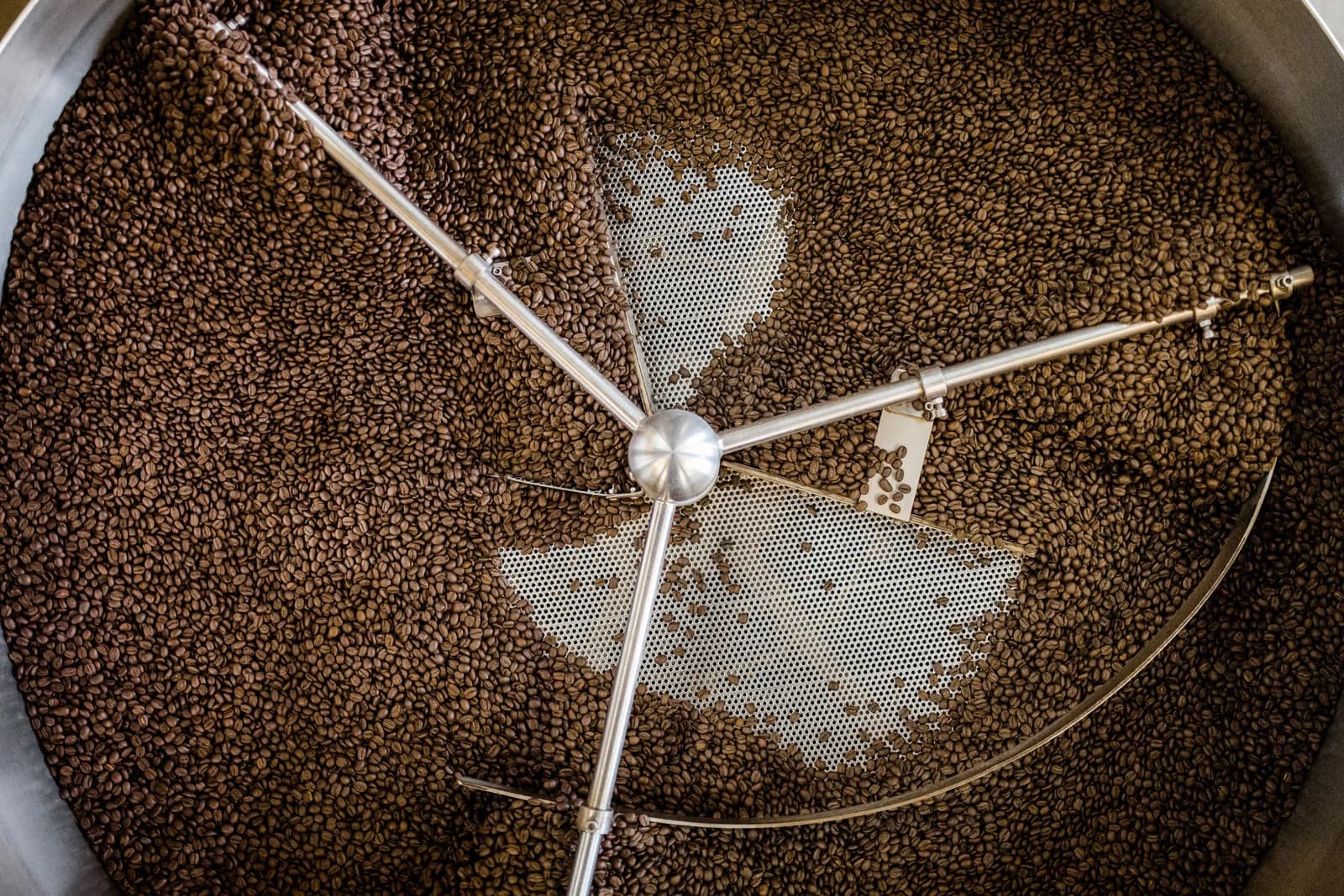
Coffee degassing becomes a wholesale problem when a café receives a fresh delivery that is difficult to dial in for the morning rush. The roast date tells the customer how old the coffee is. A tested service window tells your production team when that coffee should arrive, when the café can start using it, and how much time remains to finish the order.
Set a coffee rest period by testing the actual roast, package, and brewing application across several roast ages. Record the earliest acceptable service age and the latest tested acceptable age. Schedule dispatch so the fastest arrival is ready for use and the slowest arrival still leaves enough time to consume the order. Recheck the window when the green lot or production process changes.
Coffee degassing is the release of gas retained in roasted beans, including carbon dioxide, after roasting. Brewing readiness is the point at which your product meets its agreed sensory and preparation requirements. Establish readiness through product testing rather than waiting for gas release to finish completely.
The SCA explanation of coffee freshness, reviewed in October 2026, connects retained carbon dioxide with post-roast change and notes that grinding accelerates gas release. Its discussion explains why roast age matters; it does not establish a dispatch date for your particular wholesale SKU.
Keep three clocks in the production record: time since roasting, time since packing, and time since a bag was opened. A roast-age trial using unopened whole-bean bags cannot automatically establish an opened-bag service period or a ground-coffee schedule. Specify the product state whenever you record a result.
Packing release also needs its own evidence. Follow the coffee packaging quality control procedure for the bag and filling process. Passing those checks permits the specified packing decision; it does not prove the espresso will perform at the customer's first service.
Avoid assigning a fixed rest period from an Ethiopian regional name. ZHAW's Coffee Excellence Center research overview identifies roast level, roast time, grind size, green coffee type, and moisture among variables studied in gas and aroma release. A lot-specific trial is a more defensible basis for a delivery promise than a universal origin rule.
Test identified production batches at planned ages using the customer's brewing application. Define acceptable taste and operating behavior before the first session. The result should be a usable interval supported by repeated observations, with any untested ages clearly identified.
Use the intended batch size, roast profile, whole-bean pack, and roast-to-pack interval. Set aside unopened units for each checkpoint and repeat assessment. Keep their storage conditions recorded so a warm shelf or repeatedly opened bag does not silently become part of the experiment.
An initial exploratory schedule might test days 2, 5, 8, 12, 16, and 21 after roasting. These are proposed planning points, not published optimum ages. Add checks around the apparent beginning and end of the useful interval. If day 5 fails and day 8 passes, you have not established that day 6 passes.
Reserve enough coffee for setup, planned drinks, repeat preparations, and retained material before calculating saleable output. Size the trial around your method and equipment. Log withdrawals against the roast batch so a development program does not appear as unexplained stock loss.
Evaluate whether the coffee meets the product brief within the café's permitted adjustments. Record both sensory observations and brewing behavior. A pleasing drink that requires repeated wasteful attempts may not meet the operating promise for a busy wholesale account.
For espresso, document dose, beverage yield, extraction time, grinder setting, water conditions, and the number of setup attempts. Begin with the agreed recipe, then record each permitted adjustment. Include the account's usual milk drink where relevant. For batch brew, use the intended brewer, dose, water volume, and holding practice.
Use the same assessment method across sessions and keep individual tasting notes. The cupping team calibration protocol supports consistent sensory language; application testing supplies the customer-use decision. Excessive crema, bloom size, or one unusual extraction time alone should trigger investigation rather than determine acceptance.
Approve a window only for the conditions actually supported by the trial. Confirm the proposed start and end on additional production batches, including expected café handling. If evidence ends at day 16, label that the latest validated age rather than claiming the coffee necessarily fails on day 17.
| Field | What the reviewer needs |
|---|---|
| Product identity | Green lot, roast batch and profile, pack format, packing time |
| Test conditions | Roast age, storage history, opening time, equipment, recipe |
| Acceptance evidence | Sensory result, brewing adjustments, repeat results, unresolved faults |
| Approved scope | Earliest service age, latest validated age, opening conditions, reviewer |
Include an opened-pack check that resembles the account's consumption pattern. A café using a bag within one service and an office opening the same bag over several days impose different conditions. Keep those approvals distinct instead of extending an unopened-bag finding by assumption.
Work backward from the validated service interval and the customer's actual use rate. For an order promised ready on arrival, the fastest delivery must reach the minimum service age. The slowest delivery, plus the planned consumption period, must remain within the latest validated age.
Define all quantities in elapsed days since the roast timestamp. Let R be the earliest approved service age, L the latest validated consumption age, Tmin and Tmax the planned transit bounds, and C the elapsed period from arrival to final consumption. Use documented route experience to set the transit bounds and review exceptional delays separately.
Earliest dispatch age = max(0, R - Tmin)
Latest dispatch age = L - Tmax - C
The order fits only if the earliest age is no later than the latest age. Packing and quality release must also be complete. This scheduling calculation is an editorial planning tool, not a shelf-life test or a delivery guarantee.
Count the customer's unopened reserve time inside C. An account that receives a carton but finishes its older stock first has a longer arrival-to-final-use interval than its bag consumption rate suggests. Ask for expected first use and final use instead of assuming both follow delivery immediately.
Where the interval is empty, change the plan: reduce order size, improve delivery predictability, use another approved roast batch, or agree a customer-held rest period. A later first-use instruction needs an explicit handoff and still must leave sufficient time before L. Faster delivery can make coffee arrive too young if dispatch age stays unchanged.
A feasible dispatch date must protect both ends of the customer's service period. The fictional example below shows why reducing order quantity can solve a timing problem that changing roast day alone cannot fix. All quantities and acceptance ages are illustrative Ethio Coffee calculations prepared in October 2026, not reported customer results.
Assume a roaster has validated one Ethiopian espresso SKU for the modeled handling conditions from day 8 through day 18. A café orders 24 kg and uses 4 kg per day, beginning on arrival. The planner reserves six elapsed days for consumption, conservatively including the final service. The route normally takes between one and three days.
Now increase the order to 40 kg at the same use rate. Consumption requires ten elapsed days, so the latest dispatch age becomes 18 - 3 - 10 = day 5. The earliest remains day 7. No dispatch date satisfies both conditions; scheduling the same quantity for a different roast date does not remove that conflict.
Separate deliveries or a smaller standing order can restore a workable interval. Before accepting either change, check freight cost, café storage, handling capacity, and the revised consumption assumption. Do not extend the validated age merely to make a spreadsheet return a convenient answer.
The same model exposes inventory tied up in planned rest. At steady output of 40 kg roasted per day and eight days held before dispatch, the simplified pipeline contains about 320 kg awaiting dispatch. That is an average-flow estimate, excluding buffers and production peaks. Carry this finished-stock requirement alongside the green coffee inventory plan so bags on a shelf are not mistaken for coffee ready to cover an urgent order.
Connect the rest trial to a named green lot and its production roast. An exporter's sample assessment establishes information about that sample; your production and service trials establish the wholesale readiness window. Agree the following origin records with the supplier before transferring an existing schedule to a replacement.
These are recommended handoff questions, not claims that every Ethiopian supplier maintains identical records. Add the agreed evidence to the sample approval record. Ethio Coffee can discuss available lot information through its sourcing relationships; the roaster remains responsible for validating the finished product's service conditions.
Give the customer a roast date, batch identifier, agreed first-use date, and relevant storage and brewing instructions. Keep first-use advice separate from any best-before marking. A service-readiness window describes tested performance under stated conditions and does not establish a legal labeling rule.
For standing orders, record the usual consumption rate and how much older stock remains on delivery day. Ask the café to identify bags before opening them and to flag a change in expected use. A holiday closure can consume the remaining service window even when the carrier delivers exactly on time.
Make the instruction specific enough for the opening shift: which batch may enter service, which batch should remain sealed, and whom to contact if the approved recipe cannot produce the agreed drink. If roast ages differ within a delivery, identify the batches separately rather than giving the entire carton one implied age.
Review the batch history and customer schedule whenever the original assumptions fail. Record whether the issue concerns age, storage, brewing, or package condition before deciding the remedy. Extra rest is one possible trial variable, not a universal correction for an unsatisfactory cup.
If delivery is early, confirm whether the café can hold the identified batch until its approved first-use date. If delivery is late, recalculate final consumption age before asking the café to accept the original quantity. Use an agreed smaller release or replacement when the planned window no longer fits.
If brewing remains inconsistent inside the approved window, check actual roast and opening timestamps, grinder and water conditions, preparation records, package integrity, and retained-batch results. Do not change the roast profile and rest schedule together unless the investigation requires both; doing so makes the cause harder to establish.
Coffee degassing becomes manageable when readiness is a tested product attribute and dispatch is a calculation. Establish the service window, account for the full customer consumption period, and keep lot identity attached to every trial. That gives a wholesale team a defensible answer to the practical question: when can this café use this batch successfully?
Tell Ethio Coffee your wholesale application and trial schedule. Discuss available green coffee samples and lot information before qualifying the production roast for your café program.
Test the actual production roast and pack at several recorded ages using the intended brewing application. Define acceptable taste and operating behavior before testing. Confirm the earliest acceptable age and latest validated age across additional batches, then apply the resulting window only to the product and handling conditions covered by those trials.
Complete gas release is not the dispatch criterion. The package must meet its approved requirements, and the delivery plan must place customer use inside a validated service window. A batch can travel before its first-use date when the route, customer instructions, and remaining consumption time support that arrangement.
For coffee promised ready on arrival, subtract the shortest transit time from the minimum approved service age. Subtract the longest transit time and customer consumption period from the latest validated age. These define the earliest and latest dispatch ages; if they do not overlap, revise the quantity or delivery plan.
Review the existing approval whenever the green lot changes. Confirm the replacement identity and test its intended production roast at the relevant service ages before transferring the previous window. An origin name, processing description, or favorable sample score alone does not demonstrate that the new finished product follows the same schedule.
Only when the validation includes the intended opened-bag handling and consumption pattern. Record when the café opens each bag, how it stores the remaining beans, and how long service takes. An unopened retained pack does not reproduce repeated opening, hopper exposure, or a slow account using one bag over several days.
About This Insight: Written by Ethio Coffee Import and Export PLC, an origin-connected Ethiopian coffee exporter. Published Oct 24, 2026. Trial schedules and worked quantities are illustrative planning recommendations, not universal rest periods or reported customer results. Contact our team for current lot availability and sample information.