
Your cart is empty
Browse OfferingsLicensed & Affiliated


Ethio Coffee Import and Export PLC is a family-owned Ethiopian coffee exporter shipping green coffee beans to roasters, importers, and distributors worldwide.
© 2026 Ethio Coffee Import and Export PLC. All rights reserved.
How green coffee buyers can trace an Ethiopian lot from the fermentation tank to the sample they approve.
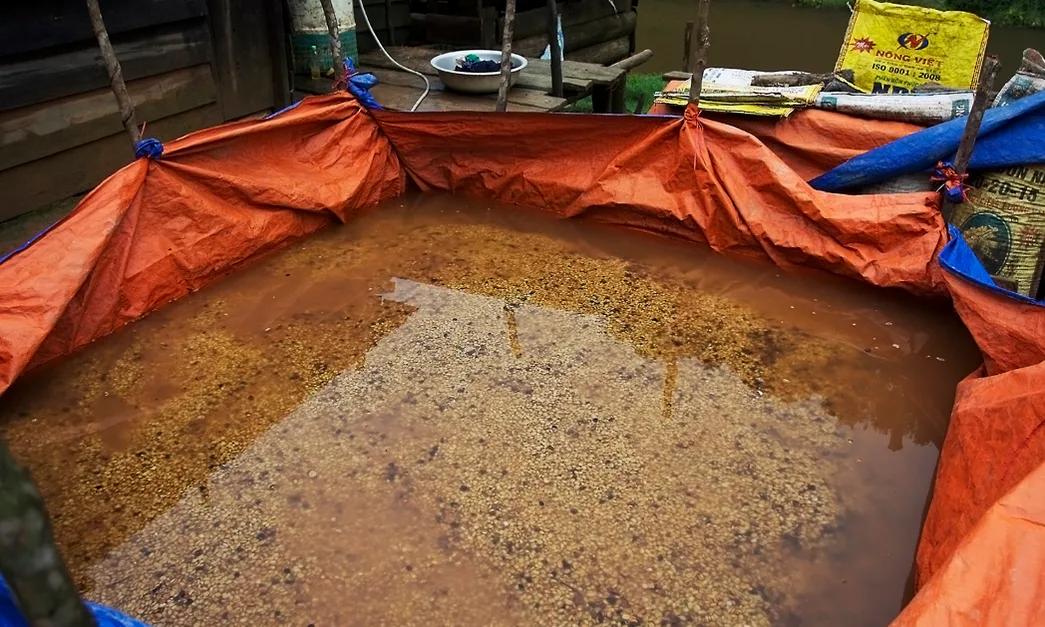
Your repeat Ethiopian lot cups with the jasmine and citrus you booked it for. Before reserving the full quantity, ask which fermentation batches the sample represents. Washed coffee fermentation can run across several tanks on the same day, and the coffee can be split again in the washing channel. A clean sample gives you a basis for buying the coffee it represents. The station record tells you how much of the offer that covers.
Washed coffee fermentation loosens the sticky mucilage around pulped coffee so it can be washed away before drying. For a repeat purchase, ask what prompted the wash, when it happened, and which channel grades and drying batches made up the lot. If part of the coffee followed an undocumented handoff, request a separate sample or a representative sample of the actual final composition before approval.
The washing point is when the station decides the mucilage has loosened enough to wash off the parchment. Ask the exporter what the operator observed and when the coffee actually entered the washing channel. Those details distinguish the decision to wash from the execution of the wash.
TechnoServe’s wet-mill guide describes a tactile check for the change from slippery to gritty parchment and a rinse of a small sample when the operator needs to confirm that the mucilage will come away. Smell, elapsed time, and any pH readings add context. Ask for the observation recorded on the day, especially if the only number on the offer sheet is an estimated fermentation duration. TechnoServe Coffee Wet Mill Processing Guide.
In a 2024 paper, Misgana Banti and colleagues report that the Jimma Agricultural Research Center used 36 hours in the tank for its washed samples, then washed and soaked the coffee for another 24 hours. Those times describe a specific research procedure in Jimma. The sequence shows what to clarify when an offer gives a single duration for a process that included both a tank run and a soak. Banti et al., Heliyon, 2024.
A pH trend can help document how a batch progressed when the station identifies the material, time, and method for each reading. An isolated value is difficult to interpret because the starting coffee, water, and operating conditions can vary. Use the station’s physical wash check and its own history alongside the readings.
When the sheet lists a pH without a stage, ask whether it came from the fermenting batch, incoming water, or a later soak. A timestamped tank reading and a soak-water reading describe different parts of the process. If the station has a time and temperature record but no pH series, retain those observations and use the sample to assess cup quality.
Ask for a cross-reference from each tank run to the channel grades and drying beds it supplied. A tank can feed more than one grade, and a drying group can receive coffee from more than one tank. Recording both splits and merges gives buyers a way to reconcile the station’s notes with a finished sample.
Thompson Owen’s 2018 Ethiopia field report describes nighttime cherry intake and pulping, morning transfer from fermentation tanks through the washing channel to a soaking tank at Taro, and channel workers separating lighter coffee while removing mucilage. For a buyer, those observations explain why an intake date can cross a shift boundary, why soaking needs its own timestamps, and why a tank number alone can cover more coffee than the sample. Sweet Maria’s Ethiopia field report, 2018.
Station and exporter records can use different names for the same batch. Ask the exporter for the smallest useful cross-reference, such as a photo of the station log paired with an export lot sheet. Include the original labels when you record it. For the earlier stages of station identification, see the Ethiopian washing station guide.
Start by deciding whether the missing information affects process history or sample coverage. If the lot is clearly mapped and only a reading is missing, evaluate the cup and record the limitation. If you cannot tell which coffee the sample covers, ask for new evidence before assigning the approval to the whole offer.
Ask the exporter what other dated records establish when the coffee moved and how the operator released it. A wash log or bed tag can establish the handoff. Document the missing reading and agree whether it matters for the program you are buying.
A buyer marketing a specific fermentation duration may need a stronger record than one buying a clean seasonal filter coffee. Put any representation you intend to print on a label or share with wholesale accounts in the same brief you send the exporter, while the team can still check it against station records.
Check whether the uncertain portion is still identifiable. If it is, request a separately coded sample and cup it before any planned merge. If the coffee is already combined and the lot can still meet your traceability requirements, ask for a representative sample drawn from the combined lot.
An unusual aroma or cup can justify a hold and a repeat evaluation. Record the cups affected and ask the exporter to check the tank, wash and drying records together. A sensory note alone cannot locate the cause. Use the green coffee sampling protocol to agree on the scope of the redraw.
In this fictional example, a wholesale roaster wants 720 kg of finished washed Guji for a seasonal filter program. The exporter can trace 540 kg of the offer to a run covered by the approval sample. The other 180 kg came through a second tank, and its channel fraction is still identifiable at the mill.
The sample supports a decision on the mapped 540 kg if it was drawn representatively from that portion. The remaining 180 kg is a quarter of the order. The buyer can plan an opening release against the covered portion and give the exporter a date for resolving the rest. The balance depends on the second sample and on whether the roaster accepts the final lot composition.
The station locates the second run’s bed tag and wash date. Its shift log also shows that washing started later than planned, so the roaster requests the second portion separately and asks whether it was held in the tank or delayed during transfer. The roaster evaluates it for the same intended filter use. If both components will make up one delivery, the buyer asks for the final assembled lot to be sampled under the agreed pre-shipment sample approval procedure.
If the second portion misses the cup target, the parties can agree to a shorter release or review another lot on its own evidence. The purchasing team can track coverage as the green weight represented by an accepted sample divided by the green weight offered. Use that figure to plan supply. Keep the cup decision and any traceability requirement in their respective records.
For washed coffee fermentation, retain the station’s wash decision and link it through the drying groups to the sample and finished green lot. State the quantity your approval covers and the evidence you want if the exporter proposes a change in composition.
A useful buying note names the intended cup profile, station and crop, planned volume, batch changes that trigger another sample, and the deadline for a decision. Ask the exporter to flag any unlinked component before milling or assembly, while the coffee can still be sampled separately. Keep the completed record with your reference sample so the next buyer can see which parts of the process and lot the original decision covered.
Send us your cup target, intended volume, and the station or lot you’re considering. Ask what process records and samples are available for that coffee.
Timing varies by station, batch and conditions. Ask for the actual tank start and wash times and the observation that prompted washing. If the coffee was soaked in clean water after washing, keep that time separate. This lets you interpret the duration on the offer sheet accurately.
There is no universal finishing pH. The starting coffee, the water and the way the station measures the batch can all affect the reading. Ask for a timestamped trend if the station measures pH, and use the operator’s physical check that the mucilage can be washed away.
One tank run can produce multiple channel grades, and each fraction can go to a different drying bed or lot. Watch for tank IDs that repeat on different processing dates as well. Ask for the dated run reference and the grade and drying IDs behind your particular sample.
Yes, if the available evidence satisfies the buying specification and a representative sample covers the identified finished lot. Record which process details are unknown. If the missing record makes part of the offer untraceable or leaves it outside the sample’s coverage, resolve that gap before approving the affected volume.